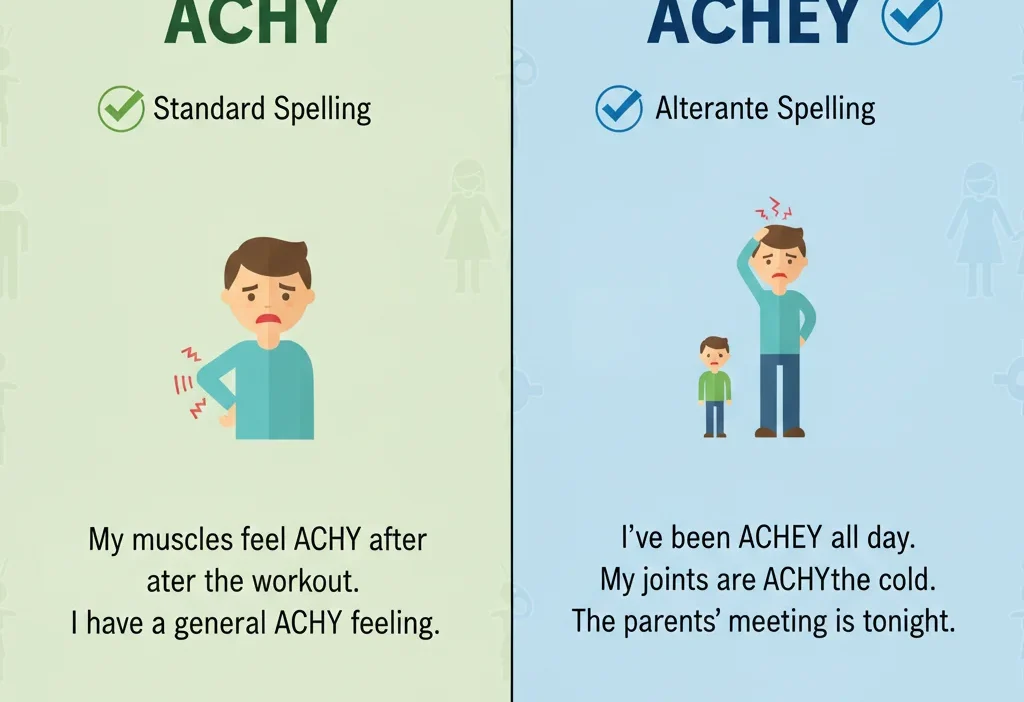
Have you ever typed achey or achy into Google and paused, unsure which spelling was right? You are not alone. This is one of those English questions that pop up when you feel sore, tired, or achy all over and want to write it correctly.
People search for achey or achy because both spellings appear online, in blogs, social media posts, and even casual emails. That creates confusion, especially for students, writers, bloggers, and non-native English users.
The problem is simple: English spelling rules are not always logical. Words change over time, and some spellings survive while others fade. When you feel achy muscles after a workout or achy legs after a long day, you want the right word. This article solves that confusion clearly and completely.
By the end, you will know the correct spelling, the meaning, UK and US usage, pronunciation, synonyms, and common mistakes. You will also see real examples and data trends. If you want a quick answer, a deep explanation, and professional advice in one place, this guide has you covered.
Achey or Achy
The correct spelling is achy.
Achey is considered a misspelling and is not standard English.
Achy means feeling physical pain, soreness, or discomfort.
Examples:
- I feel achy all over today.
- My legs are achy after walking.
- She woke up with achy muscles.
If you are wondering how do you spell achey or achy? the simple answer is achy.
The Origin of Achey or Achy
The word achy comes from the noun ache, which entered English from Old English acan, meaning pain or suffering. Over time, English formed adjectives by adding the letter -y to nouns. This turned ache into achy, meaning “full of ache.”
So why does achey exist at all? It comes from logical guessing. Since ache ends with an “e,” many people assume adding “y” should create achey. English, however, drops the silent “e” in this case.
This spelling pattern appears in many words:
- Ice → icy
- Haze → hazy
- Ache → achy
Because English evolved from many languages, spelling differences survived. That is why achey or achy became a common confusion.
British English vs American English Spelling
Both British English and American English agree on this word.
✔ Achy is correct in the UK
✔ Achy is correct in the US
✘ Achey is incorrect in both
Some words differ between regions, but this one does not.
Comparison Table
| Form | British English | American English |
| Achy | ✅ Correct | ✅ Correct |
| Achey | ❌ Incorrect | ❌ Incorrect |
If you searched achey or achy uk, the answer stays the same: achy.
Which Spelling Should You Use?
Your audience matters, but not here.
- US audience → Use achy
- UK audience → Use achy
- Global audience → Use achy
For blogs, emails, academic writing, or social media, achy is always the safe and professional choice. If you want to sound fluent and confident, avoid achey completely.
Common Mistakes with Achey or Achy
Many learners make small but common errors:
- ❌ I feel achey today
- ❌ My muscles are achey
- ❌ Is achey a word?
Correct versions:
- ✅ I feel achy today
- ✅ My muscles are achy
- ✅ Achy is the correct word
Another mistake is pronunciation confusion. People sometimes over-pronounce it. The correct achy pronunciation is:
AY-kee
It sounds light and quick, not heavy.
Achey or Achy in Everyday Examples
Emails
- I may take a rest today because I feel achy.
News
- Many patients report achy muscles after the flu.
Social Media
- Feeling achy all over 😩 long day!
Formal Writing
- Participants experienced mild achy discomfort after exercise.
These examples show how natural achy sounds in daily use.
Achey or Achy – Google Trends & Usage Data
Search data shows achy is widely used across English-speaking countries. The US, UK, Canada, and Australia all prefer achy. Searches for achey usually come from spelling doubts, not real usage.
Popular contexts include:
- Health searches
- Fitness recovery
- Cold and flu symptoms
- Pain descriptions
That explains why people search achy legs meaning and achy muscles so often.
Achey or Achy Synonyms and Meaning
Achy Meaning
To be achy means to feel dull, continuous pain or soreness.
Achy Synonym List
- Sore
- Painful
- Tender
- Stiff
- Throbbing
These synonyms help vary your writing without losing meaning.
Achy Legs Meaning and Achy Muscles
Achy legs meaning: discomfort or soreness in the legs, often from standing, walking, or poor circulation.
Achy muscles: muscle soreness caused by exercise, illness, or tension.
Both phrases are common in health writing and everyday speech.
Comparison Table: Keyword Variations
| Term | Correct | Meaning |
| Achy | ✅ Yes | Feeling pain |
| Achey | ❌ No | Misspelling |
| Achy muscles | ✅ Yes | Muscle soreness |
| Achy legs | ✅ Yes | Leg discomfort |
FAQs
Is achey a word?
No. Achey is not standard English.
How do you spell achey or achy?
The correct spelling is achy.
What does it mean to be achy?
It means feeling sore or in mild pain.
How do you spell “I’m achy”?
Spell it I’m achy.
How do you spell “achy all over”?
It is spelled achy all over.
Is achy used in formal writing?
Yes, especially in medical or descriptive contexts.
What is the achy pronunciation?
It is pronounced AY-kee.
Conclusion
The confusion around achey or achy is common, but the answer is simple once you understand it. Achy is the only correct spelling in modern English. It works in British English, American English, and global writing. Achey may look logical, but it is incorrect and should be avoided.
Understanding the meaning, pronunciation, and usage of achy helps you write with clarity and confidence. Whether you are describing achy muscles after exercise, achy legs after work, or feeling achy all over during illness, the spelling stays the same.
By learning the origin and patterns behind the word, you also improve your overall English skills. Small details like this matter in professional writing, SEO content, and daily communication. Remember the rule: drop the silent “e” and use achy every time.

Polly Clark creates clear, insightful guides on language and usage, helping readers understand meanings, differences, and nuances with clarity and confidence.