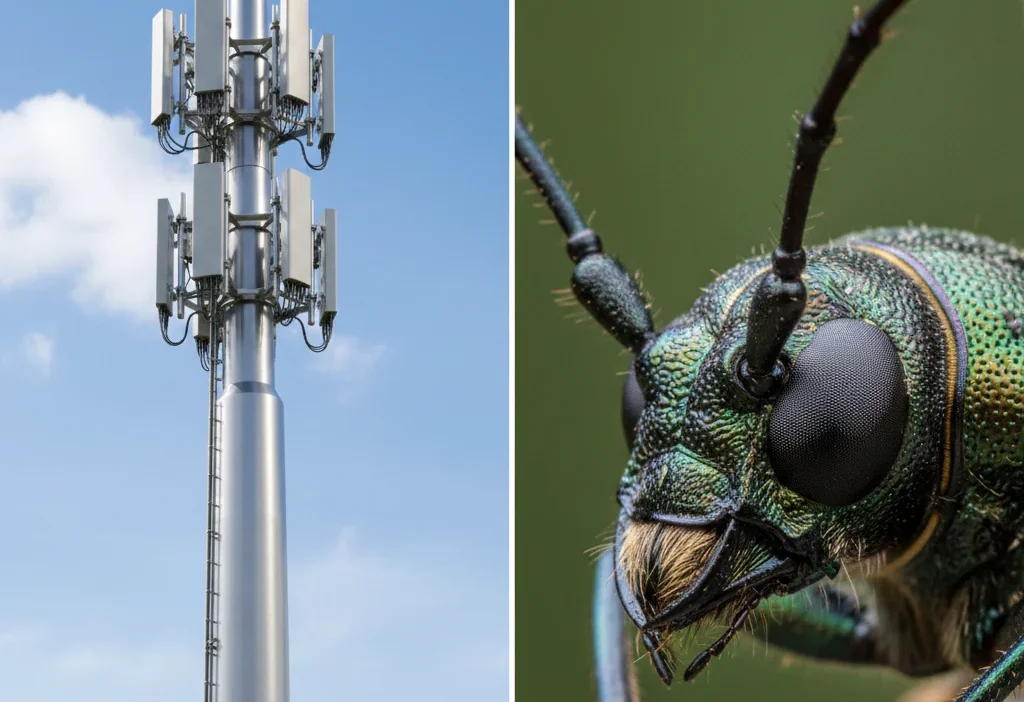
Antennas and antennae are both correct plurals, but they are used in different contexts.
- Antennas refers to devices that transmit or receive signals, such as radios, TVs, or cell towers.
Example: “The cell tower has multiple antennas to improve coverage.” - Antennae is traditionally used in biology to describe the paired sensory organs on insects and other arthropods.
Example: “The butterfly’s antennae help it sense its environment.”
Many learners confuse the two forms, which can lead to misunderstandings in scientific, technical, or general writing. Remembering the distinction is easy: antennas = devices; antennae = animals. By understanding this difference and using the correct form, your writing will be clear, professional, and precise, whether you are working on scientific articles, technical manuals, or casual content.
Antennas / Antennae
The quick answer is both are correct, but they mean different things. “Antennas” is the plural for electronic devices. “Antennae” is the plural for the sensory organs on insects and animals.
Use “antennas” when talking about technology. This includes devices for TV, radio, Wi-Fi, and cell phones. For example: The truck has two radio antennas. Or: They installed new 5G antennas on the tower.
Use “antennae” when talking about biology. This refers to the long, thin feelers on the heads of insects, crustaceans, and some other animals. For example: The ant uses its antennae to smell and touch. Or: The crayfish waved its antennae.
Remember: Tech gets As, Biology gets Ae. This simple rule works for most situations and helps you choose the right word naturally.

The Origin of Antennas / Antennae
The word “antenna” has a journey from Latin to modern English. Its origin explains why we have two plurals today. The word comes from the Latin antenna, meaning a sail yard (the horizontal pole on a ship’s mast). How did a ship part name become about feelers and radios? In the 1600s, naturalists saw a similarity. They thought insect feelers looked like the yards on a ship’s mast. So, they borrowed the Latin word “antenna” for the insect part.
Latin nouns often have specific plural forms. For antenna, the traditional Latin plural is “antennae” (pronounced an-TEN-ee). When the word entered English for insect anatomy, scholars kept this classical plural. This is common for scientific terms from Latin or Greek, like formula/formulae or index/indices.
Centuries later, with the invention of radio, a new device was needed. It sensed invisible waves, much like an insect’s feeler senses its environment. The word “antenna” was borrowed again, this time for the radio apparatus. In the 20th century, with rapid technological growth, English speakers often used the regular English plural for these new synthetic objects: just add an “s”. Thus, “antennas” was born. The spelling difference isn’t random. It reflects the word’s dual history: one root in ancient biology, the other in modern innovation.
British English vs American English Spelling
The “antennas vs antennae” difference is more about meaning than dialect. However, minor usage trends exist between British and American English. Both dialects follow the core rule: antennas for electronics, antennae for biology.
American English strongly prefers this distinction. In technical writing, science, and everyday talk, Americans consistently use “antennas” for devices. Using “antennae” for a TV aerial would seem odd or overly formal.
British English also follows this rule. But, there is a slightly higher tendency in British English to see “antennae” used figuratively or in broader contexts. For example, a British writer might say a company “has its antennae out” for new trends. An American is equally likely to say “has its antennas out.” Both are understood.
The real spelling difference is not here, but in other word patterns. British English often favours “ou” (colour) vs. American “o” (color), and “re” (centre) vs. American “er” (center). The plural of “antenna” doesn’t fit this common pattern. Its rule is based on field of study, not geography.
Spelling Comparison Table
| Plural Form | Primary Meaning | Common Context | Example Sentence |
|---|---|---|---|
| Antennas | synthetic devices for transmitting/receiving signals. | Technology, Engineering, Telecom. | “The satellite has four antennas.” |
| Antennae | Sensory organs on insects and some animals. | Biology, Entomology, Zoology. | “The moth’s antennae detected the scent.” |
Which Spelling Should You Use?
Your audience and topic should guide your choice. Follow this simple advice.
For a US Audience or Technical Context: Always use “antennas” for electronic equipment. It is the standard and expected term in engineering, telecommunications, and consumer electronics. Use “antennae” only when specifically discussing insect or animal biology. This rule is clear-cut in American English.
For a UK/Commonwealth or Academic Biology Audience: The primary rule still applies. However, in broader writing (like journalism or general non-fiction), you may encounter “antennae” used metaphorically. When in doubt, stick to the tech vs. biology rule. It is never wrong in a professional context.
For Global or General Audiences (Web Content, Manuals): Use the tech = antennas, biology = antennae rule. This is the most universally understood distinction. It provides clarity for ESL readers and aligns with global scientific and technical standards. In international manuals, “antennas” is the safe, unambiguous choice for hardware.
Key Takeaway: Let your subject matter decide. Writing about phones, Wi-Fi, or radios? Use ANTENNAS. Writing about bugs, lobsters, or animal senses? Use ANTENNAE. This subject-based approach works for any audience worldwide and demonstrates precise, knowledgeable communication.
Common Mistakes with Antennas / Antennae
The most frequent error is mixing up the two plurals. This can confuse your reader or make your writing seem less professional.
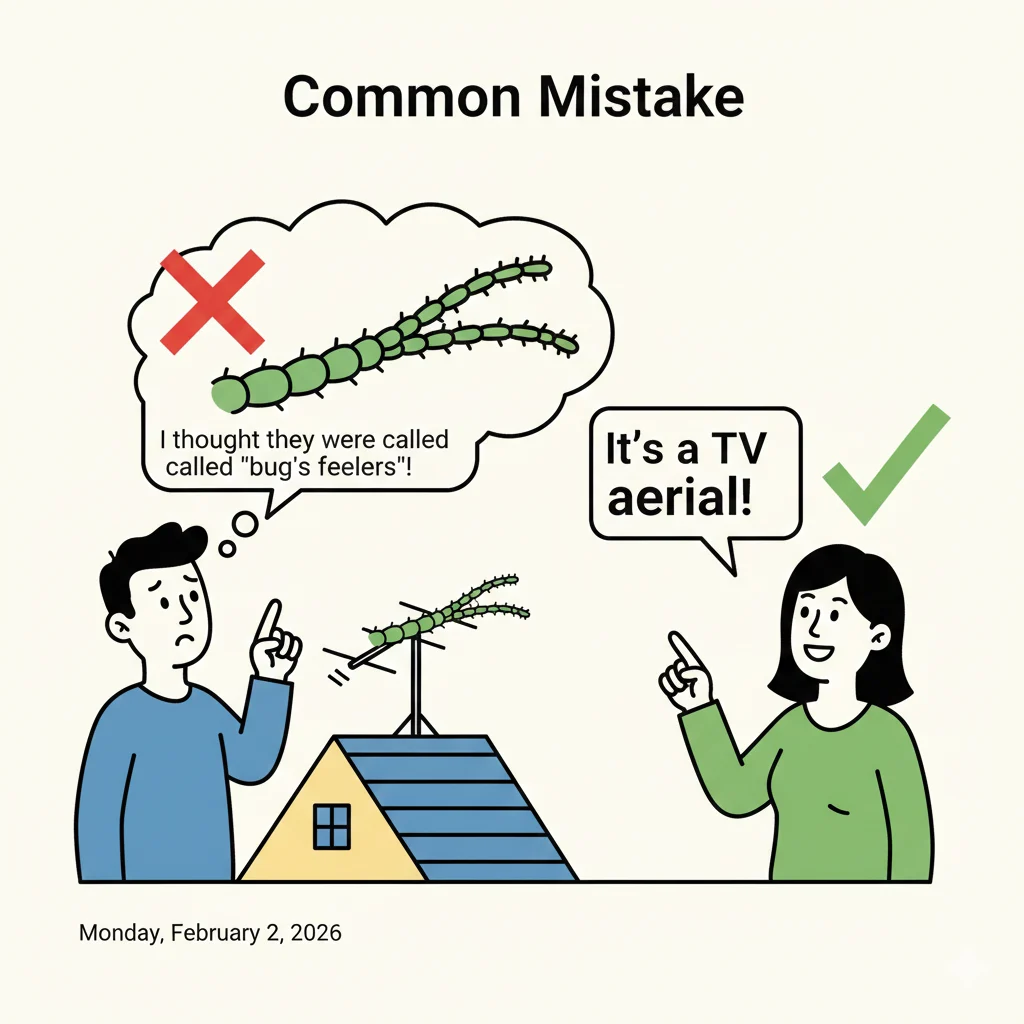
- Mistake: Using “antennae” for technology.
- Incorrect: I need to adjust the TV antennae on my roof.
- Correct: I need to adjust the TV antennas on my roof.
- Why: The TV device is technology. Use the -s plural.
- Mistake: Using “antennas” for insect biology in formal writing.
- Incorrect (in a science paper): We observed the ants’ antennas moving.
- Correct: We observed the ants’ antennae moving.
- Why: In biological science, the Latin plural “antennae” is the standard formal term.
- Mistake: Using “antenna” as a plural.
- Incorrect: The insect has two long antenna.
- Correct: The insect has two long antennae (or, less commonly, antennas).
- Why: “Antenna” is singular. You must use a plural form for more than one.
- Pronunciation Error: Mispronouncing “antennae.”
- Incorrect: Pronouncing it “an-TEN-ay.”
- Correct: The standard English pronunciation is “an-TEN-ee.”
- Why: It follows the traditional English pronunciation of Latin-derived plurals like formulae (FOR-myuh-lee).
Antennas / Antennae in Everyday Examples
Seeing words in context cements understanding. Here’s how the plurals are used naturally across different formats.
In a Professional Email (Tech Industry):
“Hi team, the site survey confirms we’ll need to install three new antennas on the north facade to ensure full 5G coverage in the plaza.”
In a News Headline (Science Section):
“Study Reveals How Moth Antennae Can Detect Cancer Cells Through Scent.”
In a Social Media Post:
“Just upgraded the antennas on my router and my Wi-Fi speed doubled! 🚀 #TechTips #HomeNetwork”
In a Formal Research Paper (Entomology):
“The experiment measured the electrophysiological response of the cockroach antennae to seven distinct pheromones.”
In a Product Manual:
“Warning: Ensure all external antennas are securely connected before powering on the unit.”
In Everyday Conversation:
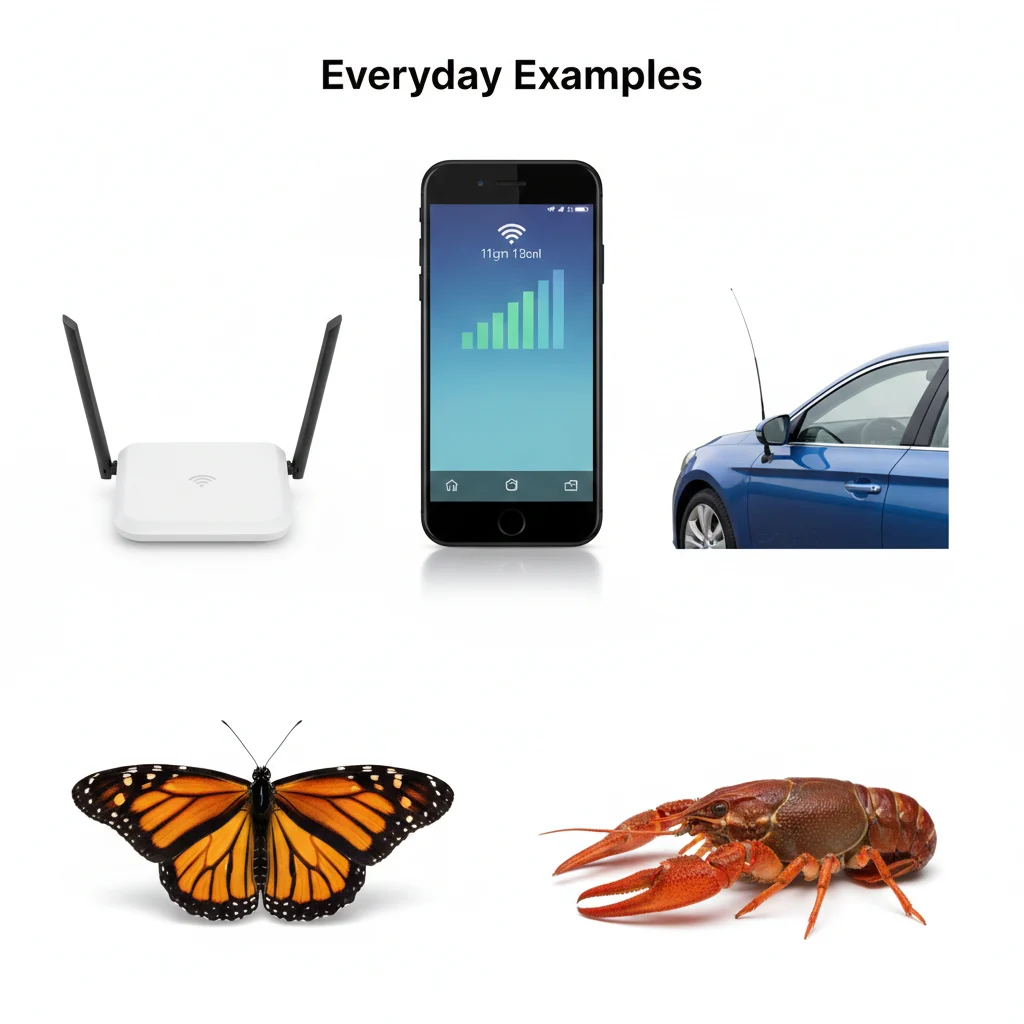
- (Tech): “My car’s radio antenna snapped in the car wash.”
- (Biology): “Look at the tiny antennae on that beetle!”
Antennas – Google Trends & Usage Data
Analyzing search data reveals clear public usage patterns. Searches for “antennas” are consistently higher globally than for “antennae.” This reflects the widespread public interest in technology (TV, radio, mobile networks) versus specialized interest in zoology.
Popularity by Country: The United States shows the strongest relative search volume for “antennas.” Searches for “antennae” see minor spikes in countries with strong academic publishing or during specific events, like science fairs or when a popular nature documentary airs.
Context of Searches: “Antennas” searches are often paired with practical, commercial terms: “TV antennas,” “car antennas,” “5G antennas,” “best antenna.” This indicates a user intent focused on purchase, installation, or troubleshooting. Searches for “antennae” are almost exclusively paired with biological terms: “insect antennae,” “ant antennae,” “what are antennae for.” This shows an intent to learn or understand a scientific concept.
The data clearly supports the core rule. The public’s natural language use aligns with the technical distinction: “antennas” dominates in practical, tech-focused contexts, which are more common in daily life.
(FAQs)
1. Is “antennas” grammatically correct?
Yes, absolutely. “Antennas” is the standard, grammatically correct English plural for synthetic antenna devices. It is preferred in all technical and general writing when referring to electronics.
2. What is the pronunciation difference?
- Antennas: Pronounced an-TEN-uhz (ending like “buzz”).
- Antennae: Pronounced an-TEN-ee (ending like “key”).
3. Can “antennae” ever be used for technology?
In very rare, stylized, or old-fashioned writing, you might see it. However, in modern standard English, it is considered incorrect. Always use “antennas” for technology to avoid confusion.
4. What is the singular form?
The singular form for both is “antenna.” Example: “The insect lost one antenna.” / “The radio needs a new antenna.”
5. Are there synonyms for these words?
Yes. For antennas (tech): aerials (common in British English), transceivers, dishes. For antennae (bio): feelers, sensory appendages.
6. Do all insects have antennae?
Nearly all insects have one pair of antennae. They are a primary sensory organ for smell, touch, taste, and even hearing. An ant’s antennae, for example, are crucial for communication and navigation.
7. Which spelling should I use in my resume or report?
Let your industry guide you. For engineering, IT, or telecom, use “antennas.” For biology, ecology, or zoology, use “antennae.” Using the correct term demonstrates attention to detail and field-specific knowledge.
Conclusion
Understanding the difference between “antennas” and “antennae” is a small but powerful tool for clear communication. The rule is straightforward: technology takes an -s, biology takes an -e. This isn’t just grammar for its own sake; it’s about precision. Using the correct plural instantly signals to your reader whether you’re discussing a network of satellite dishes or the sensitive feelers of a lobster.
It builds credibility, whether you’re an engineer writing a specification or a student drafting a biology paper. In our global, digital world, where a single word can be read by anyone from Silicon Valley to Sydney, adhering to this standard eliminates ambiguity. So, remember the simple guide: for your phone, car, or TV, you have antennas. For bugs, crustaceans, and sensory biology, you observe antennae. Embrace this distinction naturally in your writing and speech. It reflects a nuanced understanding of language that respects both the legacy of Latin and the innovations of modern English. Your communication will be more accurate, professional, and effortlessly understood

Polly Clark creates clear, insightful guides on language and usage, helping readers understand meanings, differences, and nuances with clarity and confidence.