Many English learners often get confused between “bad rap” and “bad rep”. Though they sound similar, they are not interchangeable. Using the wrong one can make your sentence awkward or change its meaning entirely. This confusion often happens because both phrases are used in informal contexts and talk about reputation or how someone is perceived.
In this guide, we’ll break down the meaning of each phrase, explain their differences, and give you simple examples that anyone — even beginners — can understand. By the end, you’ll know exactly when to use “bad rap” or “bad rep” in conversations, writing, and even in casual chats with friends. Let’s make English easy, fun, and mistake-free!
What Does Each Word Mean?
Bad Rap
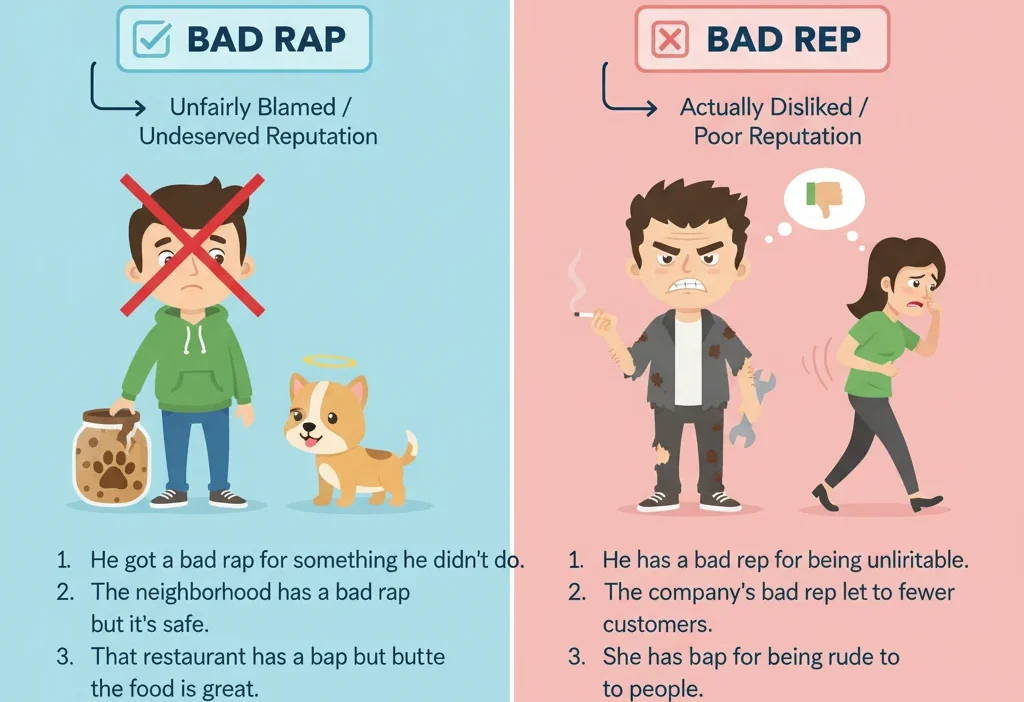
Meaning: “Bad rap” is an idiom that means someone is unfairly blamed, criticized, or given a bad reputation.
Part of Speech: Noun phrase (informal idiom)
Examples:
- John got a bad rap for something he didn’t do.
- The movie got a bad rap from critics, but audiences loved it.
- She doesn’t deserve a bad rap for one mistake.
Quick tip: Think “rap” as “blame” in informal English.
Bad Rep
Meaning: “Bad rep” is short for “bad reputation.” It describes someone or something that is genuinely known for negative traits or behavior.
Part of Speech: Noun phrase (informal)
Examples:
- That restaurant has a bad rep for slow service.
- He earned a bad rep by being late all the time.
- Don’t trust him — he has a bad rep among students.
Quick tip: “Rep” = reputation.
The Key Difference Between Bad Rap and Bad Rep
| Phrase | Meaning | Usage Example | Quick Tip |
|---|---|---|---|
| Bad Rap | Unfair blame or criticism | “She got a bad rap for no reason.” | Think: unfair judgment |
| Bad Rep | Actual negative reputation | “He has a bad rep for being rude.” | Think: earned or deserved |
Memory Hack:
- Rap → someone “raps” (blames) you unfairly
- Rep → your “reputation” is bad because of facts
Common Mistakes and How to Avoid Them
Incorrect: “She has a bad rap for always being late.”
Correct: “She has a bad rep for always being late.”
Why: Being late is a real habit, not unfair criticism.
Incorrect: “He got a bad rep for something he didn’t do.”
Correct: “He got a bad rap for something he didn’t do.”
Why: The blame was unfair, so “bad rap” is correct.
Incorrect: “That teacher has a bad rap for being strict.”
Correct: “That teacher has a bad rep for being strict.”
Why: Strictness is factual, not an unfair judgment.
When to Use Bad Rap
Use bad rap when:
- Someone is unfairly blamed
- Criticism is not deserved
- You want to emphasize unjust treatment
Examples:
- The singer got a bad rap for canceling the concert due to illness.
- Kids often give him a bad rap, but he’s really kind.
- The new game received a bad rap, though it’s actually fun.
- Don’t give her a bad rap just because of rumors.
- He got a bad rap in the news, but the story wasn’t true.
When to Use Bad Rep
Use bad rep when:
- Someone’s negative reputation is true
- You want to describe someone’s habit, behavior, or performance
- Talking about real consequences or facts
Examples:
- The gym has a bad rep for broken equipment.
- He has a bad rep for cheating on tests.
- That neighborhood has a bad rep for crime.
- She earned a bad rep for being rude to customers.
- The old laptop got a bad rep for overheating.
Memory Hack: Imagine “rep” as a report card of reputation.
Quick Recap: Bad Rap vs Bad Rep
- Bad Rap → unfair blame or criticism, not deserved
- Bad Rep → actual negative reputation, deserved or earned
- Tip: Ask yourself: “Is it unfair or true?” If unfair → rap. If true → rep.
Advanced Tips (Optional)
- Origin: “Rap” in “bad rap” comes from slang meaning blame or judgment, popular in American English since the 1960s. “Rep” is short for reputation, common in informal speech.
- Formal Writing: Avoid “bad rap” in academic essays; use “unjustly criticized.” “Bad rep” can be used in descriptive writing.
- Online Writing: Misusing these can confuse readers in social media or reviews.
Mini Quiz
Fill in the blanks with bad rap or bad rep:
- That student got a ________ for something he didn’t do.
- The café has a ________ for slow service.
- She got a ________ from classmates unfairly.
- The company earned a ________ for late deliveries.
- He got a ________ after rumors spread online.
FAQs
1. Are bad rap and bad rep the same?
No. Bad rap = unfair blame, bad rep = true negative reputation.
2. Can I use bad rap in formal writing?
It’s better to use “unjustly criticized” in formal contexts.
3. Is bad rep only for people?
No, you can use it for places, businesses, or things.
4. How do I remember the difference?
Think: rap = unfair blame, rep = reputation.
5. Can bad rap turn into bad rep?
Yes, if unfair criticism spreads and affects actual reputation.
Conclusion
Now you know the difference between bad rap and bad rep! Remember, bad rap is when someone is unfairly blamed, while bad rep is about a real negative reputation. Using the wrong phrase can confuse your listener or reader, but now you have simple tips, examples, and memory tricks to get it right. Practice using them in sentences about school, work, or daily life, and soon it will feel natural. English can be tricky, but with guides like this, every mistake becomes a learning opportunity. Keep practicing, and your confidence in using idioms and informal expressions will grow every day.

Gwendoline Riley delivers clear, compelling insights into language and usage, helping readers understand meanings, nuances, and differences with confidence.