Buying a car gives you full ownership and long-term value, while leasing allows lower monthly payments and flexibility to drive a new car every few years. Choosing depends on your budget, lifestyle, and driving habits.
When it comes to getting a vehicle, many people are confused about whether to buy or lease a car. Both options have their advantages, but mixing them up can lead to financial mistakes or missed opportunities.
In this guide, you’ll learn the simple differences between buying and leasing. We’ll explain what each option really means, give clear examples, show the correct usage, and highlight common mistakes. By the end, even beginners will understand when it’s better to buy or lease.
This article is perfect for anyone looking to make a smart decision without getting lost in complicated car financing jargon.
What Does Each Option Mean?
Buy a Car
Definition: Buying a car means paying the full price or financing it through a loan. You own the vehicle and can use it for as long as you want.
Part of Speech: Verb phrase (“buy”) + noun (“car”)
Examples:
- I decided to buy a car instead of leasing because I want to keep it for years.
- She saved enough money to buy a car without taking a loan.
- Many people prefer to buy a car to avoid mileage limits.
Lease a Car
Definition: Leasing a car means renting it from a dealership for a fixed period, usually 2–4 years. You return the car at the end of the lease.
Part of Speech: Verb phrase (“lease”) + noun (“car”)
Examples:
- I will lease a car for three years because I like driving new models.
- He chose to lease a car to have lower monthly payments.
- Families sometimes lease a car to avoid the hassle of maintenance costs.
The Key Difference Between Buy or Lease a Car
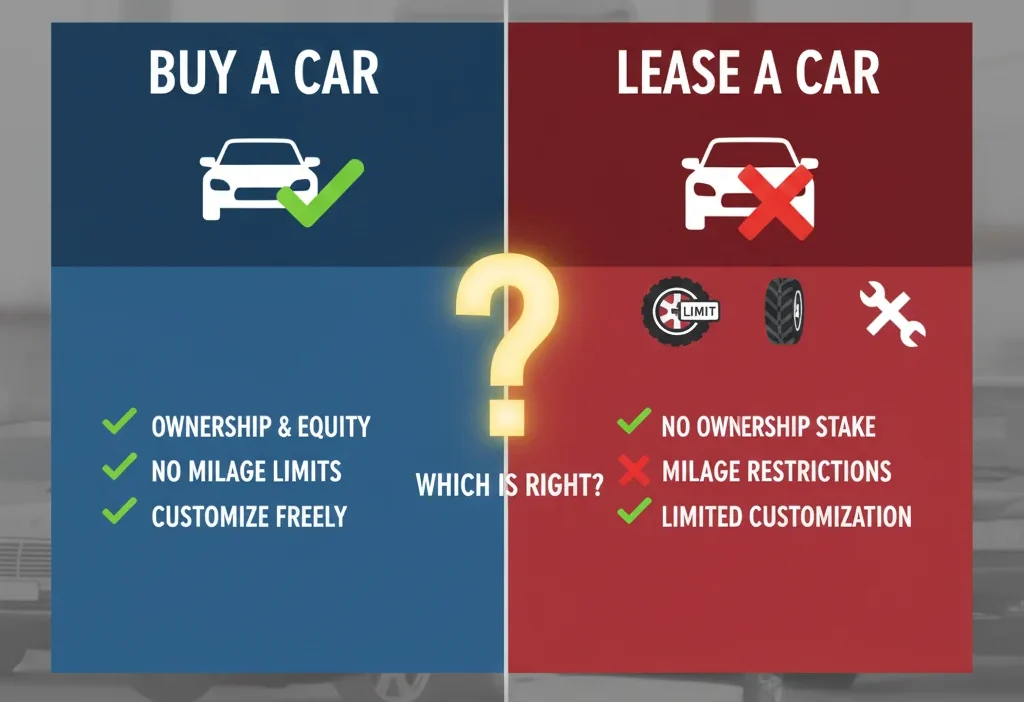
| Feature | Buy a Car | Lease a Car |
|---|---|---|
| Ownership | You own the car | You do not own the car |
| Monthly Payment | Higher | Lower |
| Maintenance Costs | Paid by owner | Often covered by dealership |
| Flexibility | Keep as long as you like | Must return after lease ends |
| Mileage Limits | None | Usually limited |
| Long-Term Cost | Potentially cheaper long-term | Can be more expensive long-term |
Quick Tip: If you love long-term ownership, buy. If you like driving new cars frequently with lower payments, lease.
Common Mistakes and How to Avoid Them
Incorrect: “I think I should buy a car for only 2 years.”
Correct: “I think I should lease a car for only 2 years.”
Reason: Buying is long-term; leasing is short-term.
Incorrect: “Leasing a car means I own it.”
Correct: “Leasing a car means I don’t own it, but I can drive it for a few years.”
Reason: Confusing ownership vs. temporary use is common.
When to Buy a Car
You should consider buying if:
- You drive long distances regularly.
- You want full ownership and control.
- You plan to keep the car for more than 5 years.
- You want to avoid mileage limits.
- You are financially ready for higher monthly payments.
Examples:
- “I buy a car because I commute 50 miles daily.”
- “She bought a car to pass it on to her kids later.”
- “Buying a car gives him the freedom to customize it.”
- “If you drive a lot, it’s smarter to buy than lease.”
When to Lease a Car
Leasing works best if:
- You want a new car every 2–3 years.
- You prefer lower monthly payments.
- You drive less than 15,000 miles per year.
- You don’t want to worry about resale value.
Memory Hack: Think lease = short-term, buy = long-term.
Examples:
- “I decided to lease a car so I can try the latest models.”
- “Leasing a car helps him avoid expensive repairs.”
- “Families often lease to get a new SUV every few years.”
Quick Recap: Buy vs Lease
- Buy a Car: Own it, higher payments, no mileage limits, long-term cost-effective.
- Lease a Car: Don’t own, lower payments, mileage limits, easy to switch cars.
- Tip: Ask yourself: Do you want short-term flexibility or long-term ownership?
Advanced Tips
- History: Leasing became popular in the 20th century as car prices rose.
- Formal Writing: “The company chose to lease a car fleet instead of buying.”
- Texting/Online: Saying “buy a car” casually may confuse if someone expects temporary use.
Mini Quiz
Fill in the blanks:
- I plan to ______ a car for the next 3 years. (buy/lease)
- She wants to ______ a car because she loves new models.
- If you drive a lot, it’s better to ______ a car.
- Leasing a car means you ______ own it. (do/does)
- To avoid long-term costs, many people choose to ______.
Conclusion
Now you know the difference between buy or lease a car. Buying gives long-term ownership and control, while leasing offers lower payments and flexibility. Understanding these simple rules helps you make smart decisions for your lifestyle and budget.
Remember, the key is to think about your driving habits, finances, and preferences. Practice using these terms in real-life conversations, and your English will improve every day!
FAQs
- What’s the main difference between buying and leasing a car?
Buying gives ownership; leasing offers temporary use with lower payments. - Is leasing a car cheaper than buying?
Monthly payments are lower for leasing, but long-term buying may save money. - Can I customize a leased car?
Usually no; leased cars must be returned in good condition. - How long does a typical lease last?
Most leases last 2–4 years. - Which is better for high-mileage drivers?
Buying is better because leases have mileage limits.

Eley Williams writes clear, engaging guides on confusing words and phrases, helping readers understand meanings, differences, and correct usage with ease.