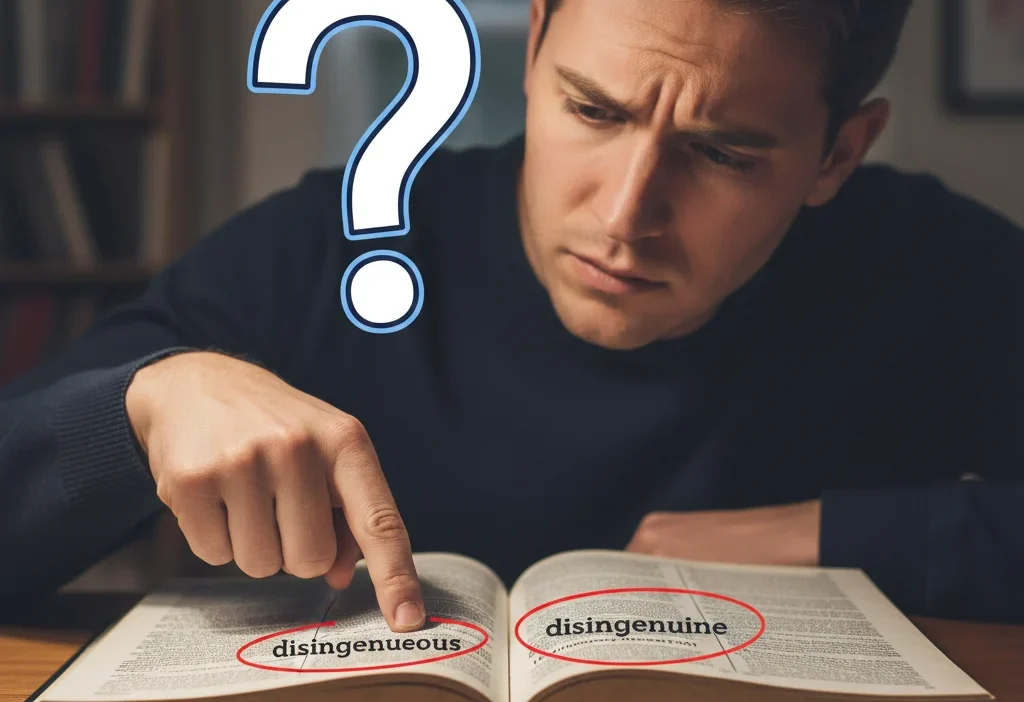
Disingenuous is the correct English word, while disingenuine is incorrect and not recognized in standard dictionaries.
This confusion is very common because the word genuine exists, which leads many people to mistakenly assume that disingenuine must also be correct. However, using disingenuine is a grammar error and can make your writing look unprofessional or inaccurate.
The word disingenuous is used to describe someone who appears honest, sincere, or innocent but is actually being misleading or hiding the truth. In contrast, disingenuine is not a real English word and should never be used in formal or informal writing.
In this article, you will learn the exact meaning of disingenuous, why disingenuine is wrong, clear usage examples, and the reason this mistake happens so often. Whether you are writing for exams, professional communication, or online content, understanding the difference between disingenuous vs disingenuine will help you write clear, confident, and correct English.
Disingenuous / Disingenuine
The correct word is disingenuous. It is the only standard, accepted form in major dictionaries. “Disingenuine” is generally considered incorrect or nonstandard. You should use “disingenuous.”
What does disingenuous mean? It describes someone who is not being honest or sincere, often by pretending to know less than they do or by hiding their true motives. A disingenuous person is not straightforward.
Examples:
- The politician’s disingenuous apology failed to address the real issue.
- It felt disingenuous when she complimented my work after criticizing it privately.
- His claim of ignorance was clearly disingenuous; the emails proved he knew everything.
The Origin of Disingenuous
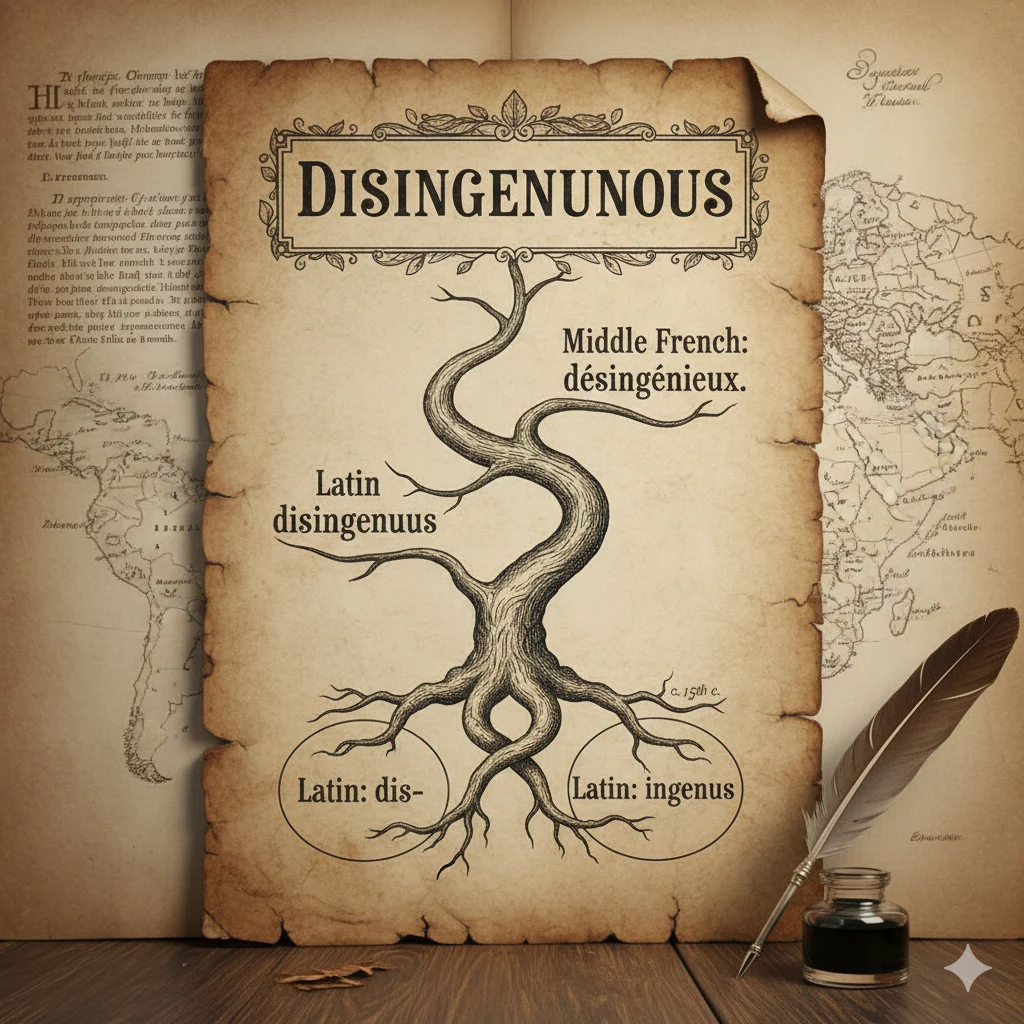
To understand why “disingenuous” is correct, we look at its history. The word entered English in the 1600s. It comes from the Latin prefix “dis-” (meaning “opposite of”) and “ingenus” (meaning “native, freeborn, or honest”). It was created as the direct opposite of “ingenuous,” which means innocent, honest, and straightforward.
Over centuries, “disingenuous” solidified its place in English. “Disingenuine” emerged later as a folk etymology—a common error where people reshape an unfamiliar word to resemble a more familiar one. In this case, people incorrectly linked it to “genuine.” While “disingenuine” might seem logical, it bypasses the word’s true history and structure. Language evolves naturally, but for formal use, the historical and dictionary-approved “disingenuous” remains the gold standard.
Sprang / Sprung: The Tiny Grammar Detail You’re Using Wrong ❌
British English vs American English Spelling
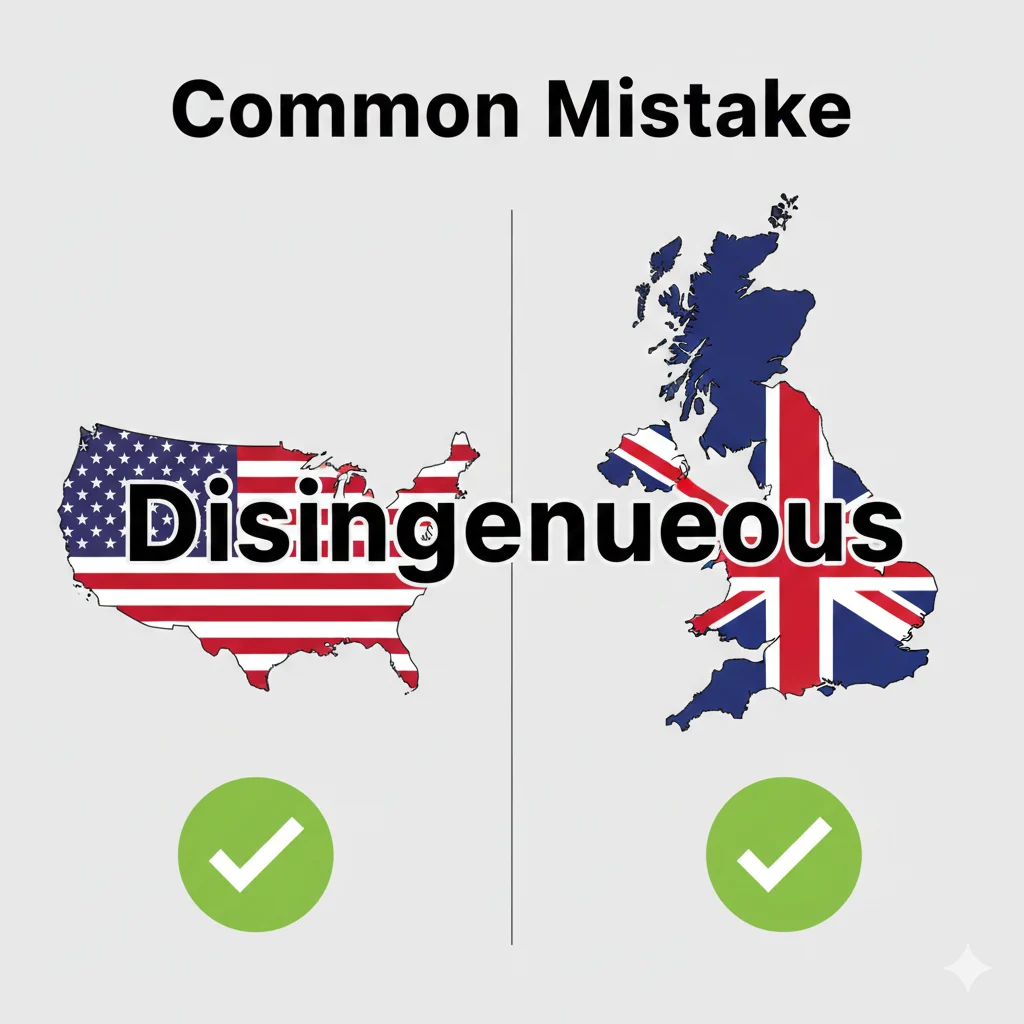
Here’s a key point: “Disingenuous” is spelled the same in both American and British English. There is no variation like “color/colour” or “analyze/analyse.” The spelling is consistent globally.
However, related words can show differences. The noun form, meaning the quality of being disingenuous, is more fluid. You might see:
- Disingenuousness (more common, used in both US and UK English)
- Disingenuity (much rarer and often considered nonstandard)
The core adjective “disingenuous” does not change. This consistency makes it easier to use correctly once you know it.
Comparison Table:
| Term | Correct? | Meaning | Example |
|---|---|---|---|
| Disingenuous | Yes (Standard) | Not candid or sincere; falsely pretending. | Her excuse was disingenuous. |
| Disingenuine | No (Nonstandard) | Often a mistaken form of “disingenuous.” | Avoid in formal writing. |
| Ingenuous | Yes | Innocent, honest, straightforward. | His ingenuous smile was charming. |
| Genuine | Yes | Authentic, real, sincere. | She offered a genuine apology. |
| Disingenuousness | Yes (Preferred) | The noun form of disingenuous. | The disingenuousness was obvious. |
| Disingenuity | Rare/Nonstandard | An uncommon, often incorrect noun form. | Generally best to avoid. |
Which Spelling Should You Use?
Your choice depends on your audience and goal. Follow this simple guide:
- For All Formal Writing (US, UK, Global): Always use disingenuous. This includes business reports, academic papers, news articles, and professional emails. Using the standard form builds credibility and demonstrates strong language skills. Search engines and grammar checkers will recognize it as correct.
- For Informal Settings & Social Media: While “disingenuous” is still correct, you might see “disingenuine” used informally. Understand it, but for clear communication, “disingenuous” is the better choice even here.
- For SEO and Digital Content: If you are a writer or blogger, target the primary keyword “disingenuous.” You can also include the phrase “is disingenuine a word” within your content to answer that common search query and match user intent, which helps with Google’s algorithm for feature snippets and “People also ask” boxes.
Common Mistakes with Disingenuous
- Using “Disingenuine”: The most frequent error. Correction: Replace with “disingenuous.”
- Confusing it with “Ingenuine”: “Ingenuine” is also nonstandard. The proper opposite of “genuine” is “fake” or “insincere.” For the opposite of “ingenuous,” use “disingenuous.”
- Mispronunciation: It’s pronounced dis-in-JEN-yoo-uss. Not “dis-in-GEN-yoo-uss” or “dis-in-GEN-oo-ine.”
- Wrong Noun Form: Using “disingenuity.” Correction: Use “disingenuousness” or rephrase: “His disingenuous behavior was clear.”
Disingenuous in Everyday Examples
- Email (Work): “Given your earlier concerns, your sudden approval of the plan seems disingenuous. Can we discuss your real reservations?”
- News Headline: “Critics Call Mayor’s Environmental Pledge Disingenuous After Factory Approval.”
- Social Media Comment: “It’s so disingenuous when brands post about sustainability while using tons of plastic packaging. #greenwashing”
- Formal Review: “The witness’s testimony was deemed disingenuous by the jury, undermining the defense’s case.”
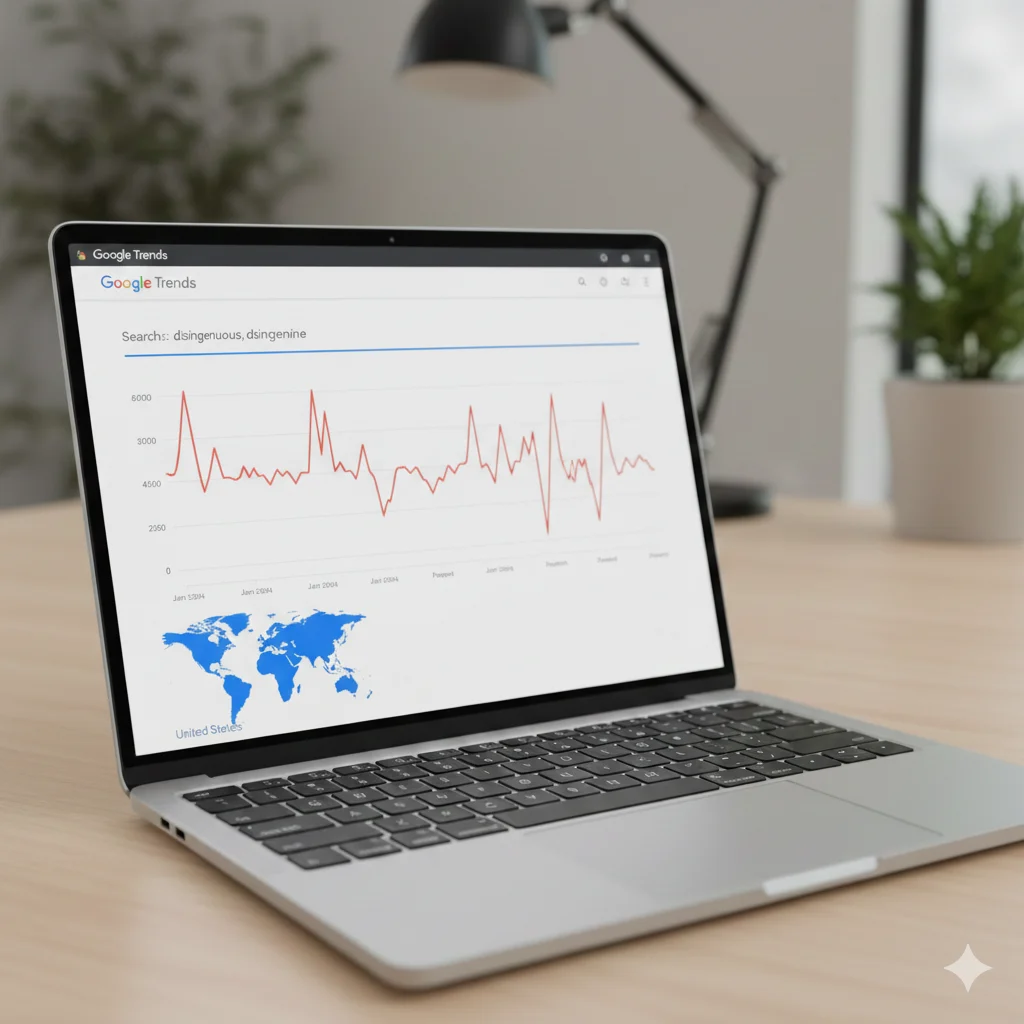
Disingenuous – Google Trends & Usage Data
Search data shows clear user intent. Searches for “disingenuous” are consistently high, especially in English-speaking countries like the United States, the United Kingdom, and Australia. Searches for “disingenuine” and “is disingenuine a word” spike regularly, revealing widespread confusion. This pattern tells us people hear the word, are unsure of its form, and turn to search engines for a quick answer.
FAQs
Q1: Is “disingenuine” a word?
A: It is not recognized as a standard word in major dictionaries like Oxford or Merriam-Webster. It is a common error. The correct adjective is “disingenuous.”
Q2: What does being disingenuous mean?
A: It means being insincere or not truthful, often by pretending to be ignorant or by hiding one’s true feelings or motives to gain an advantage.
Q3: Disingenuous vs. ingenuine—what’s the difference?
A: “Disingenuous” is the correct term for calculated insincerity. “Ingenuine” is a nonstandard word often used mistakenly to mean “not genuine.” Use “fake,” “insincere,” or “inauthentic” instead.
Q4: What is a disingenuous person like?
A: A disingenuous person is often manipulative. They might give false compliments, feign ignorance (“playing foolish“), ask questions they already know the answer to, or make promises they don’t intend to keep.
Q5: What is the noun form of disingenuous?
A: The standard noun is “disingenuousness.” Example: “The disingenuousness of his argument was transparent.”
Q6: Is disingenuous the opposite of genuine?
A: Not directly. The true opposite of “genuine” is “fake” or “counterfeit.” The opposite of “ingenuous” (innocently honest) is “disingenuous” (calculatingly insincere).
Q7: How do you pronounce disingenuous?
A: Pronounce it as dis-in-JEN-yoo-uss. Stress the “JEN” syllable.
Conclusion
The choice between disingenuous and disingenuine is clear. “Disingenuous” is the only correct standard form. Remember its origin from “ingenuous,” not “genuine.” This knowledge helps you avoid the common pitfall of using the nonstandard “disingenuine.” Whether you’re writing for an American, British, or global audience, stick with “disingenuous” for professionalism and clarity.
It works in every context, from calling out false politeness in an email to analyzing rhetoric in a formal report. By using the correct term, you strengthen your own communication and accurately describe the insincerity you observe. Language is a powerful tool—using it precisely builds trust and authority. Now that you know the truth, you can confidently identify and describe disingenuous behavior whenever you encounter it.

Jenn Ashworth offers clear, engaging explanations of language and usage, helping readers grasp meanings, nuances, and differences with accuracy and ease.