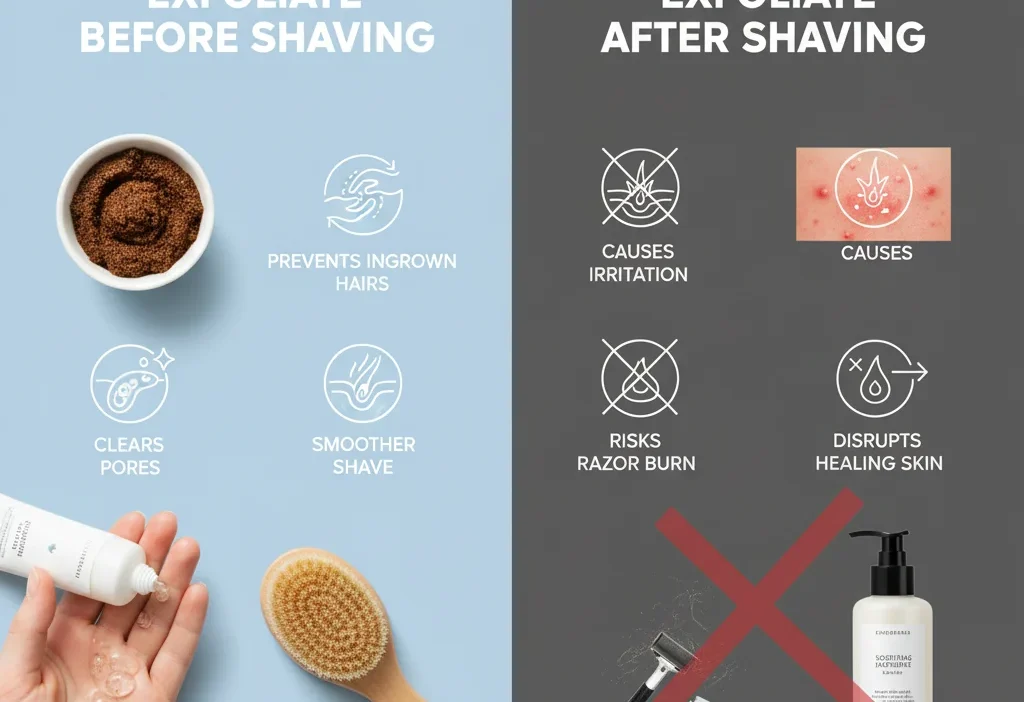
It’s generally better to exfoliate before shaving. Exfoliating first removes dead skin cells, lifts ingrown hairs, and allows for a smoother shave. Shaving afterward then cuts hair cleanly without irritating the skin. Exfoliating after shaving can sometimes cause irritation or redness because freshly shaved skin is sensitive
Many people wonder: should I exfoliate before or after shaving? It’s a common question because exfoliating and shaving both affect your skin, and using them in the wrong order can cause irritation, bumps, or redness.
In this guide, you will learn the meaning, benefits, and correct usage of exfoliating relative to shaving. We’ll cover the key differences, show practical examples, highlight common mistakes, and even share memory tips to remember what works best. By the end, you’ll know exactly when to exfoliate to keep your skin smooth and healthy — perfect for beginners or anyone confused by skincare routines.
What Does Each Action Mean?
What is Exfoliating?
Exfoliating is the process of removing dead skin cells from the surface of your skin. It can be done using a scrub, brush, or chemical exfoliant.
- Part of Speech: Verb
- Examples:
- I exfoliate my face twice a week to prevent dull skin.
- Make sure to exfoliate gently around sensitive areas.
- Exfoliating helps your moisturizer absorb better.
What is Shaving?
Shaving is the act of removing hair from your skin using a razor, electric shaver, or other tools.
- Part of Speech: Verb
- Examples:
- I shave my legs every morning.
- He prefers to shave with shaving cream to avoid cuts.
- Shaving removes hair but can also irritate the skin if not done carefully.
Tip: Think of exfoliating as “cleaning your canvas” before shaving — it prepares the skin.
The Key Difference Between Exfoliating Before or After Shaving
| Action | Meaning/Use | Example Sentence | Quick Tip |
|---|---|---|---|
| Exfoliate Before Shaving | Removes dead skin, lifts hair, prevents bumps | I exfoliate before shaving for smoother legs. | Best order: exfoliate → shave |
| Exfoliate After Shaving | May remove leftover dead skin but can irritate | Exfoliating after shaving can make skin red. | Only do gently if skin is not irritated |
| Shaving | Cuts hair from skin surface | Shave after exfoliating for a clean shave. | Always use clean blades and shaving cream |
Quick Tip: Remember: “Exfoliate first, shave second” = smoother skin, fewer bumps.
Common Mistakes and How to Avoid Them
- Exfoliating immediately after shaving:
- ❌ Incorrect: I exfoliated right after shaving, and my skin burned.
- ✅ Correct: I exfoliated the day before shaving to prevent irritation.
- Skipping exfoliation entirely:
- ❌ Incorrect: I shaved without exfoliating, and bumps appeared.
- ✅ Correct: Exfoliate before shaving to lift hair and remove dead cells.
- Using harsh exfoliants on freshly shaved skin:
- ❌ Incorrect: Scrubbing after shaving with a strong scrub caused redness.
- ✅ Correct: Use mild exfoliants or wait a few hours if you must exfoliate post-shave.
When to Exfoliate Before Shaving
Exfoliating before shaving is ideal for:
- Removing dead skin cells
- Preventing ingrown hairs
- Smoothing the skin for a clean shave
- Reducing razor bumps
Example Sentences:
- Always exfoliate before shaving your legs to avoid bumps.
- I exfoliate before shaving my face to get a closer shave.
- Exfoliating before shaving helps my moisturizer work better.
- Pre-shave exfoliation makes the skin softer and the shave smoother.
Memory Hack: Think “Pre-Shave Prep = Perfect Shave.”
When to Exfoliate After Shaving
Exfoliating after shaving is not recommended immediately but can be done gently later to:
- Remove leftover dead skin
- Maintain smoothness between shaves
- Keep skin fresh, if irritation is absent
Example Sentences:
- I wait a day after shaving before exfoliating.
- Gentle exfoliation post-shave keeps skin soft.
- Avoid scrubs immediately after shaving to prevent redness.
Memory Trick: “Post-shave = patient, gentle care.”
Quick Recap: Exfoliate Before or After Shaving
- Before Shaving: Removes dead skin, lifts hair, prevents bumps → ideal for smooth shave
- After Shaving: Only gentle exfoliation, can irritate skin → use carefully
- Tip: Pre-shave exfoliation is generally safer and more effective
Advanced Tips
- Origin: Exfoliating comes from the Latin exfoliare (to strip off leaves), while shaving comes from Old English sceafan (to scrape or cut).
- Formal Use: In skincare articles, always mention exfoliating before shaving as a recommended step.
- Online Writing Tip: Misleading advice like “exfoliate immediately after shaving” can cause irritation — clarity matters.
Mini Quiz
Fill in the blanks:
- It’s best to __________ before shaving to remove dead skin.
- Exfoliating __________ shaving may irritate sensitive skin.
- Shaving after exfoliating results in a __________ shave.
- Pre-shave exfoliation helps prevent __________ hairs.
- Gentle post-shave exfoliation can be done __________ hours later.
(Answers: 1. exfoliate, 2. after, 3. smoother, 4. ingrown, 5. 24+)
FAQs
- Can I exfoliate and shave on the same day?
- Yes, but exfoliate first and shave afterward for best results.
- What if my skin is sensitive?
- Use a gentle exfoliant or exfoliate the day before shaving.
- Is chemical exfoliation safe before shaving?
- Mild chemical exfoliants can work, but avoid harsh acids immediately before shaving.
- How often should I exfoliate if I shave daily?
- 2–3 times per week is usually enough to prevent irritation.
- Can exfoliating after shaving remove hair better?
- No, it may irritate the skin; shaving cuts hair cleanly if exfoliated first.
Conclusion
Understanding whether to exfoliate before or after shaving makes a huge difference in your skincare routine. Exfoliating before shaving is generally safer, prevents bumps, and ensures a smoother shave, while exfoliating afterward should be gentle or delayed to avoid irritation. Practice these steps, and your skin will feel soft, smooth, and healthy every time. Remember, consistent care leads to better results — your skin deserves a little extra attention every day!

Gwendoline Riley delivers clear, compelling insights into language and usage, helping readers understand meanings, nuances, and differences with confidence.