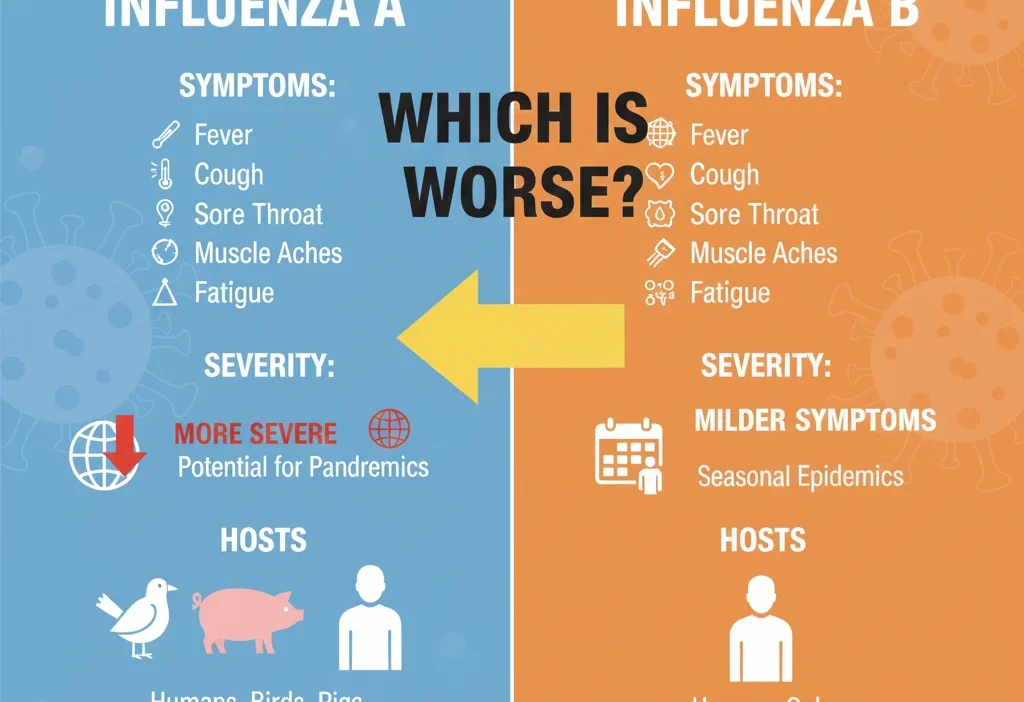
Both Flu A and Flu B are types of influenza viruses that can make you sick, but Flu A is generally considered more severe because it spreads faster, mutates more often, and can cause more serious complications, while Flu B usually leads to milder symptoms.
Flu A or B worse? Many people get confused between these two types of influenza. Both can make you feel sick with fever, chills, body aches, and fatigue. But which one is actually more dangerous? In this guide, we will explain the difference between Flu A and Flu B, their symptoms, and when one might be worse than the other.
You will also learn easy ways to remember the differences, real-life examples, and tips for avoiding mistakes when talking about the flu. By the end, even beginners will understand which flu is more serious and how to use these terms correctly.
What Does Each Word Mean?
Flu A
- Definition: Flu A is a type of influenza virus that infects humans and animals. It is known for causing seasonal flu outbreaks and can lead to severe illness.
- Part of Speech: Noun
- Examples:
- My brother caught Flu A last winter and had to stay in bed for a week.
- Doctors say Flu A spreads faster than Flu B.
- Vaccines help protect against Flu A each season.
Flu B
- Definition: Flu B is another type of influenza virus that only infects humans. Its symptoms are often milder, and it is less likely to cause a pandemic.
- Part of Speech: Noun
- Examples:
- She missed school because of Flu B.
- Flu B usually doesn’t spread as quickly as Flu A.
- The vaccine also protects against Flu B.
The Key Difference Between Flu A and Flu B
| Feature | Flu A | Flu B |
|---|---|---|
| Severity | More severe | Usually milder |
| Spread | Faster, can cause pandemics | Slower, limited outbreaks |
| Hosts | Humans and animals | Humans only |
| Mutation | Mutates frequently | Mutates less frequently |
| Example Sentence | “Flu A can lead to hospitalization in older adults.” | “Flu B usually causes mild fatigue and cough.” |
Quick Tip: If you think “A” comes first in the alphabet and often “A is more serious,” you’ll remember Flu A is worse in most cases.
Common Mistakes and How to Avoid Them
- ❌ Incorrect: “I have Flu B, and it’s more dangerous than Flu A.”
✅ Correct: “I have Flu B, but Flu A is usually more severe.” - ❌ Incorrect: “Flu A only affects humans.”
✅ Correct: “Flu A can infect humans and animals.”
Why mistakes happen: People often assume all flu viruses are equally severe. To fix this, remember that Flu A spreads faster and mutates more often.
When to Use Flu A
Use Flu A when talking about:
- Severe flu outbreaks
- Viruses that affect humans and animals
- Hospitalizations due to flu
- Seasonal flu pandemics
Examples:
- “Flu A caused many school closures last winter.”
- “Older adults are more at risk from Flu A.”
- “The vaccine this year targets Flu A and Flu B.”
- “Symptoms of Flu A include high fever and body aches.”
When to Use Flu B
Use Flu B when referring to:
- Mild or moderate flu
- Illness limited to humans
- Seasonal outbreaks without serious complications
Examples:
- “My cousin stayed home because of Flu B.”
- “Flu B rarely leads to hospitalization.”
- “Schools often see Flu B in winter months.”
- “Most children recover quickly from Flu B.”
Memory Hack: Think B for “Breezy” or lighter illness – it usually feels less severe than Flu A.
Quick Recap: Flu A vs Flu B
- Flu A: More severe, spreads faster, infects humans and animals, mutates often.
- Flu B: Usually milder, spreads slower, affects humans only, mutates less.
- Tip: Remember “A comes first = more serious” and “B = breezy, mild.”
Advanced Tips
- Flu A and B viruses have been studied since the 1930s and 1940s.
- Formal writing about influenza requires specifying the type (Flu A or B) for clarity.
- Mislabeling the flu type online or in messages can cause confusion about severity and treatment.
Mini Quiz
Fill in the blanks:
- ______ spreads faster and can cause severe illness. (Flu A / Flu B)
- ______ usually causes milder symptoms.
- ______ infects humans and animals.
- ______ affects humans only.
- A vaccine protects against both ______ and ______.
- Older adults are more at risk from ______.
- Schools often see outbreaks of ______ in winter.
Conclusion
Now you know the difference between Flu A and Flu B. Flu A is usually worse, spreads faster, and can infect both humans and animals, while Flu B is milder and affects humans only. Using these terms correctly helps you understand flu risks, communicate clearly, and stay informed. Practice using these words in sentences, and soon it will become second nature. Remember, improving your English is a daily journey, and understanding flu types is one small but important step.
FAQs
- Is Flu A worse than Flu B?
Yes, Flu A is generally more severe, spreads faster, and can cause serious complications. - Can Flu B become severe?
While usually milder, Flu B can sometimes lead to complications, especially in children or older adults. - Do vaccines protect against both Flu A and B?
Yes, seasonal flu vaccines typically cover both types. - Which flu spreads faster?
Flu A spreads faster and can cause pandemics, unlike Flu B. - How can I remember the difference between Flu A and B?
Think “A = more serious, B = breezy/milder.”

Francis Sufford crafts thoughtful, insightful explanations on language, meaning, and usage, blending clarity with storytelling to guide readers effectively.