HPV and herpes are two different viral infections. HPV mainly affects the skin and genitals and can sometimes lead to warts or cancer. Herpes causes painful blisters or sores and stays in the body for life. Knowing the difference helps in prevention, treatment, and clear communication
Many people confuse HPV or herpes, but they are not the same. Both are viral infections, and both can affect the genital area, but their causes, symptoms, and treatments differ. This confusion often leads to unnecessary worry or incorrect assumptions.
In this guide, you will learn the simple meanings of HPV and herpes, how to tell them apart, common mistakes people make, and when to use each term correctly. By the end, even beginners will clearly understand HPV vs herpes and can explain it in everyday language.
What Does Each Word Mean?
HPV (Human Papillomavirus)
Meaning: HPV is a virus that can infect the skin and mucous membranes. It often causes warts and in some cases may lead to cancer.
Part of Speech: Noun
Examples:
- The doctor said I might need a vaccine to prevent HPV.
- Some types of HPV can cause cervical cancer.
- Teenagers are encouraged to get the HPV shot early.
Herpes
Meaning: Herpes is a virus that causes painful blisters, usually on the mouth or genitals. The virus remains in the body and can reactivate over time.
Part of Speech: Noun
Examples:
- Cold sores are caused by oral herpes.
- She was diagnosed with herpes last year.
- People with herpes should avoid sharing utensils during an outbreak.
The Key Difference Between HPV and Herpes
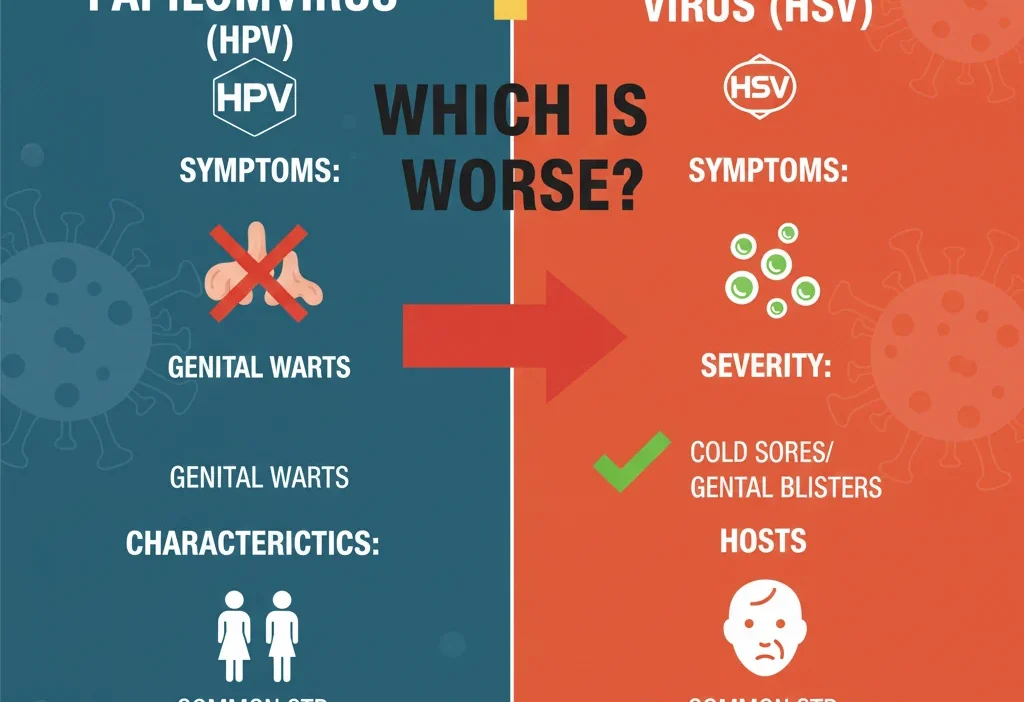
| Feature | HPV | Herpes |
|---|---|---|
| Type of Virus | Human Papillomavirus | Herpes Simplex Virus (HSV) |
| Main Symptoms | Warts, sometimes cancer | Painful blisters or sores |
| Contagious | Yes, through skin or sexual contact | Yes, through skin, sexual contact |
| Duration | Often temporary, some types lifelong | Lifelong, can reactivate |
| Quick Tip | HPV = warts/cancer risk | Herpes = sores/blisters |
Memory Tip: Think: HPV = warts, Herpes = blisters.
Common Mistakes and How to Avoid Them
Mistake 1: Saying herpes causes warts.
- ❌ Incorrect: Herpes causes genital warts.
- ✅ Correct: HPV causes genital warts, while herpes causes blisters.
Mistake 2: Confusing contagiousness timing.
- ❌ Incorrect: HPV spreads only during outbreaks.
- ✅ Correct: HPV can spread even without visible warts; herpes spreads mainly during active sores.
Mistake 3: Using both interchangeably in conversation.
- ❌ Incorrect: I have HPV, so I also have herpes.
- ✅ Correct: Having HPV does not mean you have herpes.
When to Use HPV
Use HPV when discussing:
- Warts or abnormal skin growths
- Vaccines for virus prevention
- Cervical cancer or other related cancers
Examples:
- Doctors recommend the HPV vaccine for teens.
- Regular screenings can detect HPV early.
- HPV spreads mostly through sexual contact.
- My friend asked if HPV can go away on its own.
When to Use Herpes
Use herpes when talking about:
- Painful sores or blisters
- Viral infections that remain in the body
- Outbreak triggers like stress or illness
Examples:
- He avoided kissing because he had oral herpes.
- Herpes can reactivate even after years.
- Antiviral medicine helps control herpes outbreaks.
- She learned how to live with herpes safely.
Memory Hack: Think H for Herpes = Hurts.
Quick Recap: HPV vs Herpes
- HPV: Warts, sometimes cancer, spreads easily, can be vaccinated against.
- Herpes: Blisters/sores, lifelong, outbreaks recur, controlled with medication.
- Tip: HPV = skin changes, Herpes = painful blisters.
- Always use the correct term to avoid confusion and stigma.
Advanced Tips
- Origin: HPV = Human Papillomavirus; Herpes = Greek “herpein” meaning “to creep.”
- Formal Writing: Use the precise term in essays, medical reports, or news.
- Online Misuse: Using “herpes” for warts or vice versa spreads misinformation.
Mini Quiz
Fill in the blanks:
- Genital warts are caused by ______.
- Painful blisters on lips are usually ______.
- The virus that can cause cervical cancer is ______.
- ______ outbreaks can be triggered by stress.
- Vaccines can help prevent ______.
FAQs
1. Can someone have both HPV and herpes?
Yes, it’s possible to be infected with both viruses at the same time.
2. Is HPV or herpes more dangerous?
HPV can lead to cancer in some cases, while herpes mainly causes recurring sores.
3. Are there vaccines for both?
Vaccines exist for HPV, but not for herpes.
4. Can HPV go away on its own?
Yes, many HPV infections clear naturally within a few years.
5. How can I prevent herpes?
Avoid direct contact with sores, use protection during sexual activity, and take antiviral medicine if prescribed.
Conclusion
Understanding HPV or herpes is important for health, communication, and preventing stigma. HPV mainly causes warts and sometimes cancer, while herpes leads to lifelong blisters. Using the right word helps you speak clearly and stay informed. Keep practicing these terms, and soon it will be easy to explain them to anyone. Every step improves your English and your knowledge of health!

Eley Williams writes clear, engaging guides on confusing words and phrases, helping readers understand meanings, differences, and correct usage with ease.