For sudden injuries or swelling, ice is usually better. For stiffness or chronic knee pain, heat often works best. But the choice depends on your specific situation.
Knee pain can be frustrating. Whether it comes from an injury, overuse, or arthritis, many people wonder: should I use ice or heat for knee pain? It’s easy to get confused. Ice and heat seem similar because both provide relief—but they work in very different ways.
This guide will help you understand the difference between ice and heat, show you when to use each, and provide easy examples. Even if you’ve never thought much about it, by the end of this article, you’ll know exactly which one to choose.
What Does Each Option Mean?
Ice for Knee Pain ❄️
Definition: Ice therapy, also called cold therapy, involves applying a cold pack or ice to the knee to reduce pain and inflammation.
Part of Speech: Noun (ice), used as a therapy method.
Examples:
- I applied ice to my swollen knee after soccer practice.
- Using ice for 15 minutes helped reduce the pain.
- Ice packs are great for fresh injuries or sprains.
Tip: Ice is like hitting the “pause button” on swelling.
Heat for Knee Pain 🔥
Definition: Heat therapy uses warm packs, heating pads, or warm water to relax muscles, improve circulation, and relieve stiffness.
Part of Speech: Noun (heat), used as a therapy method.
Examples:
- I used heat on my knee to ease stiffness before exercise.
- Applying heat helped relax my tight muscles.
- Heat works well for chronic knee pain or soreness.
Tip: Heat is like giving your knee a gentle “wake-up massage.”
The Key Difference Between Ice and Heat
| Feature | Ice ❄️ | Heat 🔥 |
|---|---|---|
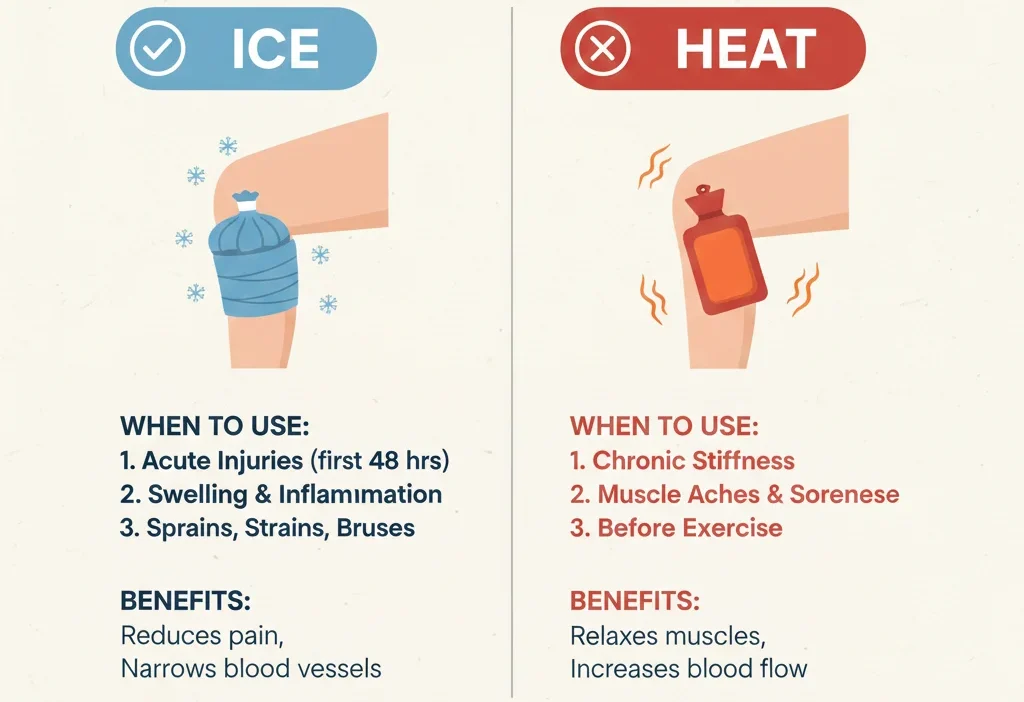
| Purpose | Reduce swelling and inflammation | Relieve stiffness and relax muscles |
| Best for | Recent injuries, sprains, swelling | Chronic pain, stiffness, muscle tension |
| How it feels | Cold, numbing effect | Warm, soothing effect |
| Duration | 10–20 minutes per session | 15–30 minutes per session |
| Quick Tip | If your knee is red, hot, or swollen → use ice | If your knee feels tight or stiff → use heat |
Memory Tip: Think “Ice = Injury, Heat = Habitual pain.”
Medicine, Health Routines, and Physical Conditions: Hidden Truths
Common Mistakes and How to Avoid Them
Mistake 1: Using heat immediately after a sprain.
- ❌ Wrong: I put a heating pad on my swollen knee.
- ✅ Correct: I used ice on my swollen knee.
Mistake 2: Using ice for chronic stiffness.
- ❌ Wrong: I applied ice every night for my aching knee.
- ✅ Correct: I used heat to relax my stiff knee muscles.
Why it happens: People confuse pain relief with swelling reduction. Ice fights inflammation, heat eases tight muscles.
When to Use Ice
Ice is best for:
- Acute injuries like sprains or strains
- Swollen knees after exercise
- Red, hot, or tender joints
Example Sentences:
- After falling during basketball, I used ice on my knee for 15 minutes.
- My knee swelled after hiking, so I applied ice every 2 hours.
- Ice helps reduce pain from a sudden bump or twist.
- When the joint is inflamed, wrap ice in a towel and apply gently.
Quick Hack: If it’s red or swollen, grab the ice first!
When to Use Heat
Heat is best for:
- Stiff knees or arthritis
- Muscle tightness
- Chronic pain after long periods of sitting
Example Sentences:
- I used heat to relax my knees before yoga.
- Applying heat helped ease soreness after running.
- Warm baths with heat can reduce stiffness in the morning.
- Use heat before physical activity to loosen muscles.
Memory Trick: Imagine heat warming up frozen gears—perfect for stiff knees.
Quick Recap: Ice vs Heat
- ❄️ Ice = sudden injury, swelling, inflammation
- 🔥 Heat = stiffness, chronic pain, muscle tightness
- Use ice for 10–20 minutes, heat for 15–30 minutes
- Remember: Red/hot → Ice, Stiff/tight → Heat
Advanced Tips (Optional)
- Ice therapy has been used for centuries to reduce swelling after injuries.
- Heat therapy can be traced back to traditional medicine for relaxing muscles and improving circulation.
- In formal writing, mention ice therapy or heat therapy specifically to avoid confusion.
- Online advice often misleads people—understanding the difference prevents misuse.
Heat or Ice for Sciatica: The Tiny Detail You’re Doing Wrong
Mini Quiz
Fill in the blanks:
- After twisting my knee, I applied _______ for 15 minutes.
- My knees feel stiff every morning, so I use _______ before exercise.
- _______ is best for swelling caused by an acute injury.
- _______ helps loosen tight muscles and ease chronic pain.
- If your knee is hot and red, you should use _______.
Conclusion
Choosing between ice or heat for knee pain is easier than you think. Ice reduces swelling and inflammation, while heat relaxes stiff muscles and improves blood flow. By remembering the simple rule—Ice = Injury, Heat = Stiffness—you can relieve knee pain safely and effectively. Keep practicing these tips, and soon choosing the right therapy will become second nature. Your knees—and your daily comfort—will thank you!
FAQs
1. Can I use ice and heat on my knee the same day?
Yes, but only in separate sessions. Use ice for swelling, then heat later for stiffness, avoiding direct overlap.
2. How long should I apply ice or heat?
Ice: 10–20 minutes per session. Heat: 15–30 minutes per session.
3. Is heat bad for a recent injury?
Yes, heat can increase swelling in a fresh injury. Always start with ice first.
4. Can children use ice or heat for knee pain?
Yes, but always wrap ice in a cloth and supervise heat use to avoid burns.
5. Which is better for arthritis: ice or heat?
Heat is usually better for arthritis because it eases stiffness. Ice can be used if the joint is inflamed.

Gwendoline Riley delivers clear, compelling insights into language and usage, helping readers understand meanings, nuances, and differences with confidence.