Have you ever wondered whether a watch or a warning is more serious? Many people get confused between these two weather alerts, and mixing them up can lead to unnecessary panic—or worse, underestimating danger. In this guide, we’ll break down the difference in a simple way, so you’ll always know which one demands immediate action.
When severe weather strikes, terms like watch and warning often make headlines. But what do they actually mean? And which one is more serious? Many people use them interchangeably, but doing so can be risky.
In this article, you will learn:
- The simple meanings of watch and warning
- How to tell them apart easily
- Real-life examples so you never confuse them again
By the end, even beginners or young learners will understand which alert signals to prepare for and which one requires immediate action. This is your ultimate guide to never misreading a weather alert again.
What Does Each Word Mean?
Watch
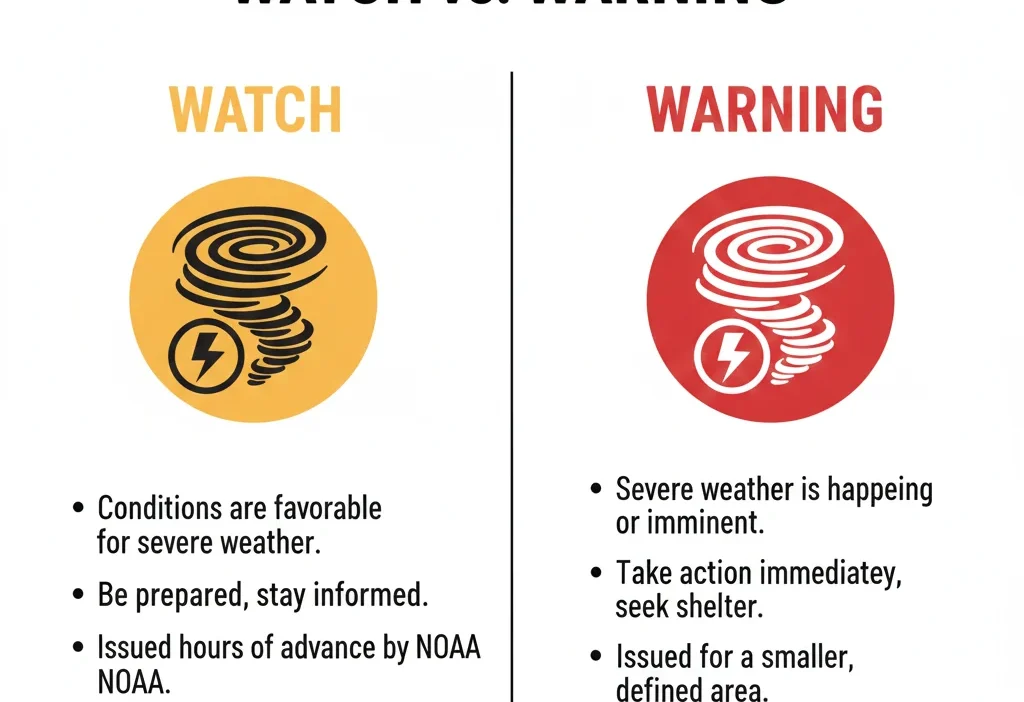
A watch is an alert that conditions are favorable for dangerous weather. It doesn’t mean the event is happening yet, but you should be prepared.
Part of speech: noun
Examples:
- A tornado watch has been issued for our county.
- Stay tuned to local news during a severe thunderstorm watch.
- The hurricane watch means the storm could hit in the next few days.
Memory tip: Think of a watch as “keep watching the sky” — stay alert, but it’s not emergency time yet.
Warning
A warning means that dangerous weather is occurring or imminent. Immediate action is required to stay safe.
Part of speech: noun
Examples:
- A tornado warning is in effect—take shelter immediately!
- The flash flood warning tells us to move to higher ground.
- Severe storm warnings are broadcast on TV and radio.
Memory tip: A warning is urgent — danger is happening now, not later.
The Key Difference Between Watch and Warning
| Feature | Watch | Warning |
|---|---|---|
| Meaning | Conditions are favorable for danger | Danger is happening or imminent |
| Urgency | Be prepared | Take immediate action |
| Timing | Could happen soon | Happening now or about to happen |
| Example | Tornado watch issued for your area | Tornado warning: take shelter immediately |
| Quick Tip | “Watch” = observe, prepare | “Warning” = act now |
Common Mistakes and How to Avoid Them
Incorrect: “There’s a tornado warning, but I don’t need to worry yet.”
Correct: “There’s a tornado watch, so I should prepare.”
Incorrect: “The storm watch means it’s safe to go outside.”
Correct: “The storm warning means it’s unsafe—take shelter.”
Why mistakes happen: People assume both words mean the same thing. Remember: watch = prepare, warning = act.
When to Use Watch
Use watch in situations where danger might happen, but isn’t confirmed.
Examples:
- Meteorologists issued a severe thunderstorm watch for the city.
- A hurricane watch is in effect for coastal areas.
- Tornado watches help schools decide whether to keep students inside.
- Stay alert during a winter storm watch.
Tip: Think of a watch as “get ready, keep an eye out.”
When to Use Warning
Use warning in situations where danger is imminent or ongoing.
Examples:
- A tornado warning means take shelter immediately.
- Flash flood warnings indicate streets are unsafe.
- A winter storm warning signals hazardous driving conditions.
- Severe heat warnings tell people to stay indoors.
Memory hack: Imagine a red alarm flashing — that’s your warning to act now.
Quick Recap: Watch vs Warning
- Watch: Be prepared, danger is possible, not certain
- Warning: Take action immediately, danger is happening
- Watch = observe, warning = act
- Never confuse the two: using the wrong one can cost safety
Advanced Tips
- Origin: “Watch” comes from the idea of keeping a “vigil,” while “warning” comes from “warn,” meaning to alert someone of immediate danger.
- Formal writing: In reports or essays, always use “watch” for precautionary alerts and “warning” for imminent danger.
- Online use: Misusing these terms on social media can spread panic or false reassurance. Always double-check the alert type.
Mini Quiz
Fill in the blanks with watch or warning:
- A tornado ______ has been issued, so stay alert.
- Flash flood ______! Move to higher ground immediately.
- Winter storm ______ means roads might get icy soon.
- Severe thunderstorm ______ is in effect for the evening.
- Heat wave ______: avoid going outside during peak hours.
(Answers: 1-watch, 2-warning, 3-watch, 4-watch, 5-warning)
FAQs
1. Is a watch or warning more serious?
A warning is more serious because danger is happening or imminent.
2. How long does a watch last?
Typically, a watch can last several hours to a day, depending on the storm.
3. Can a watch become a warning?
Yes, if the weather conditions worsen, a watch can be upgraded to a warning.
4. Are watches issued for all types of storms?
Mostly severe weather like tornadoes, hurricanes, and thunderstorms.
5. What should I do during a watch?
Stay informed, prepare your emergency kit, and monitor local news.
Conclusion
Now you know the difference between a watch and a warning. Remember:
- Watch = prepare
- Warning = act immediately
By practicing these simple rules, you can stay safe and never confuse these important alerts again. Understanding these two words is a small but powerful step toward improving your English and keeping your loved ones safe.

Eley Williams writes clear, engaging guides on confusing words and phrases, helping readers understand meanings, differences, and correct usage with ease.