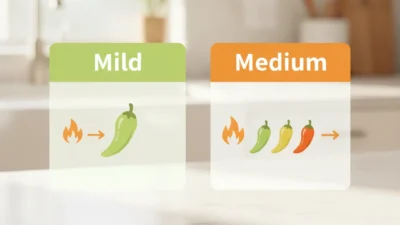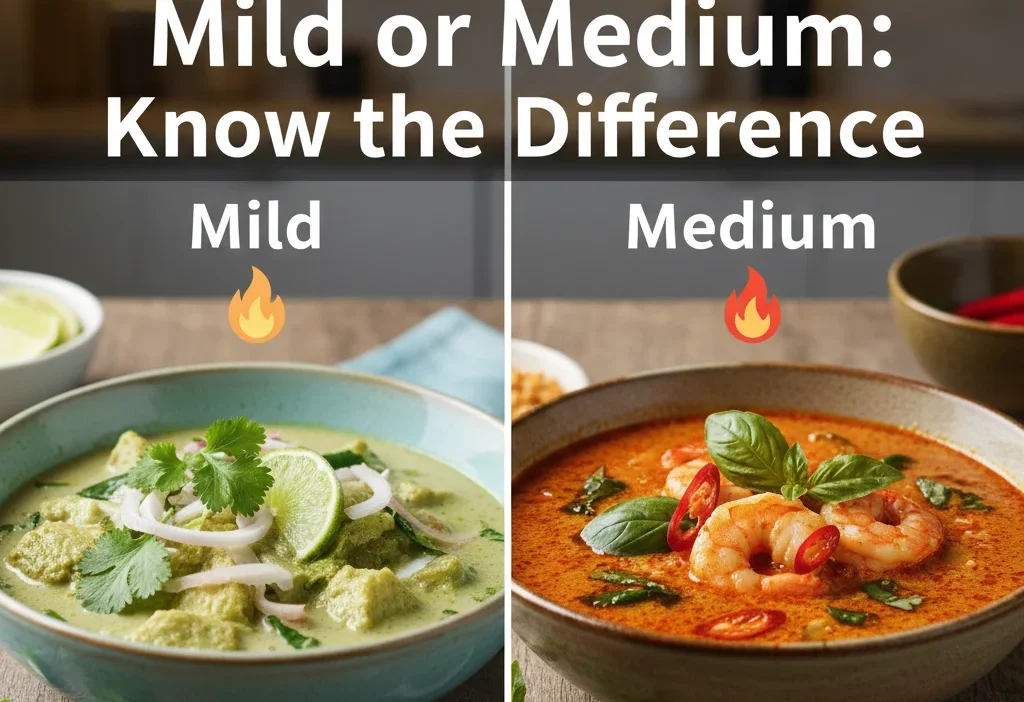
Have you ever stared at a menu, a recipe, or even a conversation and wondered, “Should I say mild or medium?” It might seem small, but choosing the wrong word can confuse your meaning or make your English sound off. In this guide, we’ll make it easy to understand the difference between mild or medium, with simple explanations, examples, and handy tips. By the end, you’ll know exactly when to use each word correctly—no complicated grammar, just clear, real-life English
“Mild” and “medium” are words you see every day—on food menus, in weather reports, or when describing emotions or experiences. Yet, many people mix them up because they both indicate a degree or level. The confusion isn’t just about food—it can affect how clearly you communicate in writing or speaking.
This guide will help you understand the meaning of mild or medium, their differences, correct usage, and common mistakes to avoid. We’ll include simple examples from daily life so you can remember them easily. By the end, even a beginner or a young student can confidently use these words without second-guessing. Whether you’re talking about flavor, intensity, or style, you’ll know which word fits best.
What Does Each Word Mean?
Mild
- Meaning: Gentle, not strong, not harsh.
- Part of speech: Adjective
Examples:
- The curry is mild, so children can eat it.
- She has a mild personality; she never gets angry easily.
- Today’s weather is mild, not too hot or cold.
Memory Tip: Think “soft and gentle” when you hear “mild.”
Medium
- Meaning: In the middle; moderate in strength or intensity.
- Part of speech: Adjective
Examples:
- I like medium-spicy salsa—not too hot, not too bland.
- He cooked the steak medium, right between rare and well-done.
- The package comes in medium size, perfect for one person.
Memory Tip: Think “middle level” when you see “medium.”
The Key Difference Between Mild and Medium
| Feature | Mild | Medium |
|---|---|---|
| Meaning | Gentle, soft, not strong | Moderate, middle level, in-between |
| Usage | Flavor, personality, intensity | Strength, size, degree |
| Examples | Mild curry, mild weather, mild voice | Medium steak, medium spice, medium size |
| Quick Tip | “Mild = soft and easy” | “Medium = middle of two extremes” |
Quick Tip:
If it’s gentle or easy to handle, it’s mild. If it’s in the middle or moderate, it’s medium.
Common Mistakes and How to Avoid Them
Mistake 1: “I like mild steak.” ❌
Correction: “I like medium steak.” ✅
- Steak cooking levels use medium, not mild.
Mistake 2: “This soup is medium.” ❌
Correction: “This soup is mild.” ✅
- If you mean the soup is gentle and not spicy, use mild.
Mistake 3: “Her mood is medium.” ❌
Correction: “Her mood is mild.” ✅
- Use mild for gentle emotions, medium for size, intensity, or amount.
When to Use Mild
- Use mild for flavors that are gentle: soups, curries, sauces.
- Use mild for gentle weather or temperatures.
- Use mild for soft personalities or small effects.
Examples:
- I prefer mild cheese on my sandwich.
- He gave a mild warning to the students.
- The lotion has a mild fragrance.
- She enjoys mild exercise, like walking.
- Today’s breeze is mild, perfect for a picnic.
When to Use Medium
- Use medium for food cooked to a certain degree: steak, burgers, or sauces.
- Use medium for size: small, medium, large.
- Use medium for intensity or levels that are in the middle.
Examples:
- Cook the chicken to medium heat.
- I bought a medium t-shirt because it fits me perfectly.
- He likes his coffee medium-strength.
- The steak should be medium-rare for best taste.
- Adjust the brightness to medium on your screen.
Memory Hack: Picture a scale from 1–10: mild = 1–2 (soft), medium = 5 (middle).
Quick Recap: Mild vs Medium
- Mild: Gentle, soft, easy → mild curry, mild weather, mild personality.
- Medium: Middle, moderate → medium steak, medium size, medium spice.
- Rule of Thumb: Mild = soft; Medium = in the middle.
Advanced Tips
- Origins: “Mild” comes from Old English milde meaning gentle or calm. “Medium” comes from Latin medium meaning the middle.
- Formal Writing: Use mild for adjectives describing softness or gentleness. Use medium for scales, sizes, and degrees.
- Online Texting: Misusing these words in online recipes or posts can confuse readers—always pick the correct one for clarity.
Mini Quiz: Fill in the Blanks
- I like my coffee __________ (mild / medium) strength.
- The curry is very __________ (mild / medium), perfect for kids.
- He wore a __________ (mild / medium) jacket, not too thick or thin.
- I prefer my steak cooked __________ (mild / medium).
- Her voice is so __________ (mild / medium), it’s calming.
Answers: 1-medium, 2-mild, 3-medium, 4-medium, 5-mild
FAQs
1. Can mild and medium be used interchangeably?
No, mild means gentle or soft, while medium refers to something in the middle. Context matters.
2. Is mild always less spicy than medium?
Yes. Mild indicates low intensity, while medium is moderate.
3. Can medium describe emotions?
Rarely. Medium is usually used for size, intensity, or cooking. Use mild for gentle emotions.
4. How do I remember the difference?
Think: Mild = soft, Medium = middle level. Visual scales help.
5. Can mild and medium be used for temperature?
Yes. Mild = gentle warmth or coolness; Medium = moderate temperature.
Conclusion
Now you know the difference between mild or medium, and using them correctly is easy! Mild describes something soft, gentle, or easy to handle, while medium describes something in the middle or moderate. With real-life examples from food, weather, personality, and size, you can confidently choose the right word.
Practice by looking around your home, menu, or school—spot mild or medium situations and describe them. Over time, you’ll instinctively know which word fits. English is full of little details like this, and mastering them makes your speech and writing clear and professional. Keep practicing, stay curious, and enjoy improving your English every day!

Eley Williams writes clear, engaging guides on confusing words and phrases, helping readers understand meanings, differences, and correct usage with ease.