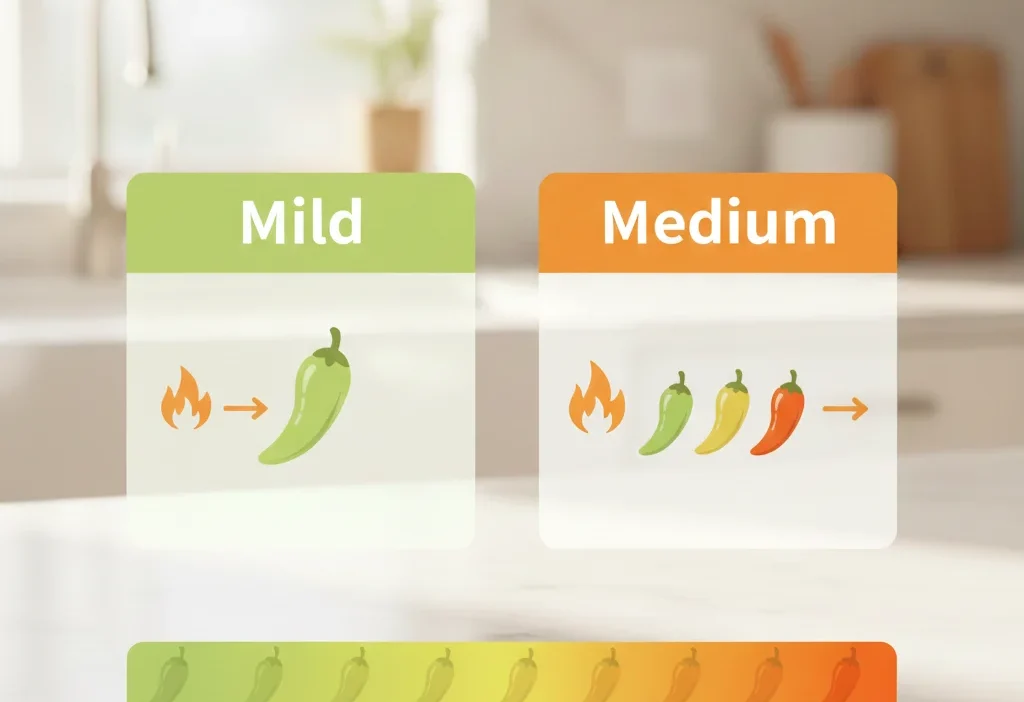
Ever stood in front of a menu or grocery shelf wondering whether mild or medium is hotter? You’re not alone — millions of people confuse these heat levels every day. This guide makes it so simple that even a child can instantly understand the difference and choose the right spice level confidently
Many people get confused when choosing between mild or medium — which is hotter? These two heat levels appear everywhere: in salsa jars, taco sauces, seasonings, noodles, chips, and restaurant menus. Because the words look similar and both describe spice, people often mix them up. But the difference is actually very simple.
In this easy-to-understand guide, you’ll learn the exact meaning of mild and medium, how hot each level really is, and how to use these terms correctly when cooking, ordering food, or explaining spice levels to someone else. You’ll also see examples, charts, real-life comparisons, and tricks to help you never forget the difference again.
By the end, even a 4th-grade student will know exactly which one is hotter and how to choose the perfect spice level every time.
What Does Each Word Mean?
Meaning of “Mild”
Mild means “a small amount of heat.”
It is the lowest spice level in most foods.
Part of speech: Adjective
(It describes how hot food is.)
Examples of “Mild” in easy sentences:
- This salsa is mild, so it won’t burn your mouth.
- My little brother likes mild noodles.
- The curry is mild, which means it tastes warm, not spicy.
Think of mild as the “beginner level” of spice — warm, gentle, and safe for almost everyone.
Meaning of “Medium”
Medium means “a middle amount of heat,” hotter than mild but not extremely spicy.
Part of speech: Adjective
Examples of “Medium” in easy sentences:
- The sauce is medium, so it has a clear kick.
- I ordered medium wings because I want some heat but not too much.
- This salsa is medium, which means it’s hotter than mild.
Think of medium as the “middle level” — enough heat to feel it, but not strong enough to hurt.
The Key Difference Between Mild and Medium
The biggest question:
👉 Mild or medium — which is hotter?
✔️ Medium is hotter.
Mild is the lowest level. Medium is the next level up.
Here is a simple comparison:
Comparison Table: Mild vs Medium
| Feature | Mild | Medium |
|---|---|---|
| Heat Level | Low | Medium (higher) |
| Spice Feel | Warm, gentle | Noticeable kick |
| Beginner-Friendly | Yes | Sometimes |
| Great For | Kids, sensitive stomachs | Regular spice lovers |
| Example Foods | Mild salsa, mild wings | Medium salsa, medium wings |
Quick Memory Tip:
Mild = Minimum heat
Medium = Middle heat (hotter)
The “M” words help you remember:
- Mild = Mini heat
- Medium = More heat
Common Mistakes and How to Avoid Them
❌ Mistake 1: Thinking mild and medium are almost the same.
Correction: Medium is clearly hotter.
Why it happens: The words sound similar.
Fix: Remember: medium sits in the middle, so it’s always hotter than mild.
❌ Mistake 2: Ordering medium when you actually want mild.
Correction: If you want almost no heat, choose mild.
Fix: Think “mild = safe,” “medium = spicy enough to feel.”
❌ Mistake 3: Using both words to describe the same food.
Correction: They are different heat levels.
Fix: Always check the label or menu. Mild comes first, medium comes next.
When to Use “Mild”
Use mild when the food has very low heat and only a light, warm taste.
Use “mild” in situations like:
- Cooking for children
- Making food for someone with a sensitive stomach
- When you want flavor, not fire
- When you’re unsure of someone’s spice tolerance
- When you prefer warm—not spicy—food
Easy example sentences:
- I bought the mild salsa so everyone can enjoy it.
- The soup has a mild pepper flavor.
- She likes mild wings because they don’t burn.
- This noodle cup is mild, perfect for beginners.
- The chili is mild, so it’s safe to eat even if you dislike spice.
When to Use “Medium”
Use medium when the food has noticeable heat but is still manageable.
Use “medium” when:
- You want more flavor with a little burn
- You like spice but not extreme heat
- You’re upgrading from mild
- You want a balanced taste—spicy but not painful
- You want a kick in salsa, wings, noodles, or curry
Easy example sentences:
- The restaurant’s medium curry has a nice spicy kick.
- I ordered medium wings because mild felt too weak.
- This medium salsa tastes perfect with chips.
- The noodles are medium, so you’ll feel the heat.
- She prefers medium spice for stronger flavor.
Memory Hack:
Medium = Middle → Hotter than mild.
Imagine a ladder:
Mild (low) → Medium (middle) → Hot (high)
Quick Recap: Mild vs Medium
- Mild = low heat
- Medium = higher heat
- Medium is always hotter than mild
- Choose mild if you want gentle flavor
- Choose medium if you want a bit of a kick
- Mild is for beginners; medium is for regular spice lovers
Advanced Tips (Optional but Helpful!)
1. Where these words come from
- Mild comes from Old English meaning “gentle” or “soft.”
- Medium comes from Latin meaning “middle.”
This matches their heat levels perfectly.
2. How they’re used in menus
Most restaurants follow this common order:
Mild → Medium → Hot → Extra hot
So medium always sits above mild.
3. How misuse changes meaning
If you say:
“I want mild but spicy,” it confuses the cook.
“Mild” means very little spice.
Always choose the term that matches your heat expectation.
Mini Quiz (Test Your Understanding!)
Fill in the blanks:
- _______ is the hotter spice level.
- I ordered the _______ salsa because I want more heat.
- My younger sister prefers _______ wings because they are gentle.
- _______ means the middle heat level.
- If you want almost no spice, choose _______.
- This noodle cup is _______, so beginners can eat it.
- I want a small kick, so I’ll choose the _______ flavor.
(Answers: medium, medium, mild, medium, mild, mild, medium)
FAQs
1. Mild or medium — which is hotter?
Medium is hotter. Mild is the lowest spice level, while medium sits above it.
2. Is medium spicy for beginners?
Yes, medium can feel hot for beginners. Mild is safer.
3. Is mild good for kids?
Yes. Mild is gentle and kid-friendly.
4. What spice level comes after medium?
Usually hot, then extra-hot.
5. Does mild mean no spice?
Not zero spice — just very low heat.
Conclusion
Now you know the clear difference between mild and medium, and you’ll never mix them up again. Mild means low heat and gentle flavor, while medium brings more heat and a stronger spicy kick. Whether you’re cooking at home or ordering food in a restaurant, understanding these two terms helps you choose the perfect spice level every time.
Keep practicing by noticing spice labels on jars, menus, and snack packs. With time, choosing your heat level will become super easy and natural.

Polly Clark creates clear, insightful guides on language and usage, helping readers understand meanings, differences, and nuances with clarity and confidence.