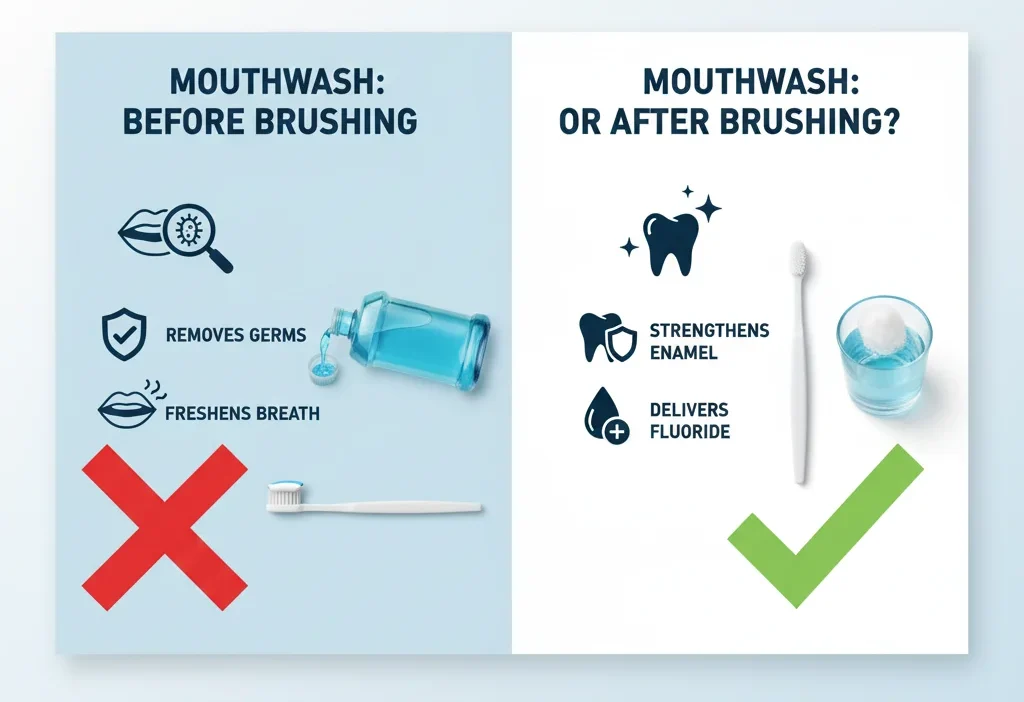
You can use mouthwash after brushing for the best results, as it helps remove leftover germs and provides lasting freshness. Using it before brushing can reduce its effectiveness, as brushing afterward may wash away the mouthwash benefits.
Many people often wonder about the correct timing for using mouthwash — should it be before or after brushing? This confusion is common because both methods seem helpful, yet dentists often recommend one approach over the other.
In this guide, you’ll learn the difference between using mouthwash before brushing and using it after brushing. We’ll cover when each method is suitable, common mistakes, and practical examples so that anyone — even beginners — can easily follow. By the end, you’ll know exactly how to maximize your oral hygiene routine.
What Does Each Option Mean?
Mouthwash Before Brushing
Using mouthwash before brushing means rinsing your mouth with it first to loosen food particles and kill bacteria before brushing your teeth.
- Part of speech: Noun + action (using as a routine)
- Examples:
- She used mouthwash before brushing to freshen her breath.
- Some people prefer mouthwash before brushing as part of a morning routine.
- Rinsing with mouthwash before brushing can feel refreshing.
Mouthwash After Brushing
Using mouthwash after brushing involves brushing first and then rinsing to remove remaining bacteria, strengthen enamel, and give a fresh taste.
- Part of speech: Noun + action (part of oral care routine)
- Examples:
- He rinsed with mouthwash after brushing for long-lasting freshness.
- Mouthwash after brushing can help prevent cavities.
- Dentists often recommend using mouthwash after brushing for maximum benefit.
The Key Difference Between Mouthwash Before and After Brushing
| Feature | Mouthwash Before Brushing | Mouthwash After Brushing |
|---|---|---|
| Purpose | Loosen food debris, initial freshening | Kill remaining germs, strengthen enamel |
| Timing | Before brushing | After brushing |
| Effectiveness | Moderate | High |
| Example Sentence | “I rinse before brushing every morning.” | “I rinse after brushing to keep breath fresh.” |
| Quick Tip | Feels refreshing but may be washed away | Lasts longer and provides stronger protection |
Memory Tip: Think of brushing as “cleaning the floor” and mouthwash as “polishing it.” You polish after cleaning, not before!
Common Mistakes and How to Avoid Them
- Mistake: Using mouthwash before brushing and skipping brushing afterward.
Correction: Always brush first or at least rinse thoroughly afterward to remove plaque. - Mistake: Swallowing mouthwash accidentally.
Correction: Always spit out mouthwash and follow label instructions. - Mistake: Thinking one method is “wrong.”
Correction: Mouthwash before brushing is okay occasionally, but after brushing is optimal for long-lasting protection.
When to Use Mouthwash Before Brushing
- Loosen food particles before your morning brush.
- Refresh your mouth quickly when you don’t have time to brush immediately.
- Can be part of a multi-step oral care routine, e.g., before flossing.
Examples in real life:
- Before breakfast, she rinsed with mouthwash to wake up her senses.
- He had a quick mouthwash before brushing at work.
- Students may rinse before brushing after lunch at school.
- Travelers can use mouthwash before brushing when on the go.
When to Use Mouthwash After Brushing
- Best for long-lasting fresh breath.
- Helps strengthen enamel and prevent cavities.
- Removes bacteria left behind even after brushing.
Examples in real life:
- After brushing in the morning, he rinsed with mouthwash for extra protection.
- After dinner, she used mouthwash to prevent plaque buildup.
- Before bedtime, mouthwash after brushing keeps teeth healthy overnight.
- Memory hack: think of it as the “final step” in your oral care routine.
Quick Recap: Mouthwash Before vs After Brushing
- Before brushing: Helps loosen food particles, gives a quick fresh feeling, moderate effectiveness.
- After brushing: Kills remaining bacteria, strengthens teeth, provides long-lasting freshness.
- Tip: For best results, use mouthwash after brushing, especially fluoride-based types.
Advanced Tips
- The concept of rinsing for oral hygiene has been around for centuries; ancient cultures used herbal rinses.
- In exams or formal writing about health, mention that mouthwash after brushing is generally recommended.
- In texting or social media advice, people may confuse timing, so always clarify: after brushing is optimal.
Exfoliate Before or After Shaving? The Hidden Truth Revealed
Mini Quiz
Fill in the blanks:
- For long-lasting freshness, mouthwash should be used ______ brushing.
- Using mouthwash ______ brushing can help loosen food particles.
- Swallowing mouthwash is ______.
- Mouthwash after brushing helps prevent ______.
- Brushing is like cleaning, and mouthwash is like ______.
FAQs
1. Can I use mouthwash before and after brushing?
Yes, but the after-brushing rinse is more effective.
2. Is it harmful to use mouthwash before brushing?
No, but it may reduce the overall effectiveness of your oral care routine.
3. Should children use mouthwash?
Children under 6 should avoid it unless supervised by a dentist.
4. Does mouthwash replace brushing?
No, it only complements brushing and flossing.
5. Which type of mouthwash is best after brushing?
Fluoride-based mouthwashes are ideal for strengthening enamel.
Conclusion
Using mouthwash after brushing is the most effective way to maintain oral hygiene and fresh breath. While rinsing before brushing can feel refreshing, the full benefits come after you clean your teeth. Remember these simple tips, practice consistently, and your teeth and gums will thank you! Improving your oral care is easy when you follow the right steps every day.

Francis Sufford crafts thoughtful, insightful explanations on language, meaning, and usage, blending clarity with storytelling to guide readers effectively.