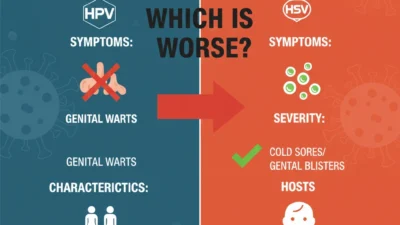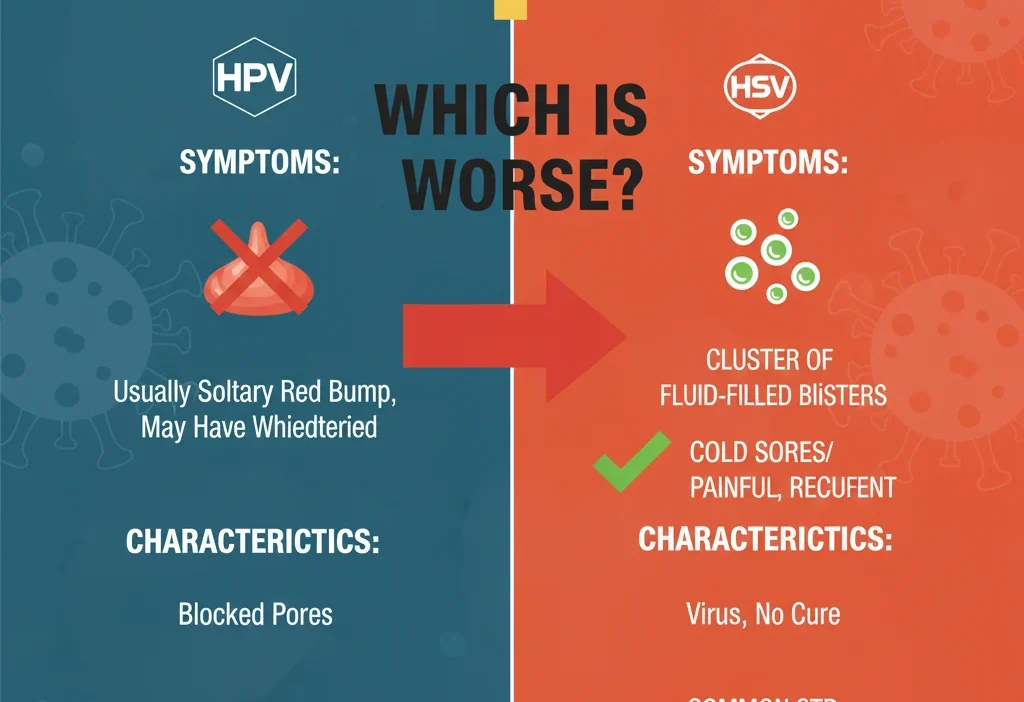
A pimple is a simple skin blockage caused by oil, dirt, or bacteria. Herpes, however, is a viral skin infection that forms painful, fluid-filled blisters. Knowing the difference between pimple and herpes helps you choose the right care and avoid confusion
Many people get confused when trying to understand the difference between pimple or herpes, especially when a bump appears around the lips, face, or private areas. Both can look similar at first, but their meaning, causes, and correct usage in English are completely different.
In this simple guide, you’ll learn what each word means, how they differ, and how to use them correctly when speaking or writing. This article uses primary keywords, secondary keywords, and semantic keywords naturally—so even a beginner or a Class 4 student can understand everything easily.
By the end, you will clearly know the difference between pimple and herpes, when to use each term, and how to remember them forever.
What Does Each Word Mean?
1. Pimple (Meaning & Usage)
A pimple is a small skin bump caused by blocked pores. It happens when oil and dirt get trapped under the skin.
- Part of speech: Noun
- Simple meaning: A small red bump on the skin
- Where it appears: Face, chin, forehead, back, chest
Easy Examples:
- I got a pimple on my nose before my school photo.
- Pimples usually appear when your skin gets oily.
- She used a face wash to clean her pimples.
2. Herpes (Meaning & Usage)
Herpes is a viral infection that causes small, painful blisters filled with fluid.
- Part of speech: Noun
- Simple meaning: Painful, fluid-filled blisters caused by a virus
- Where it appears: Lips, mouth, genitals
Easy Examples:
- Herpes causes tiny blisters that may burn or itch.
- Cold sores around the mouth are a type of herpes.
- Herpes spreads through close skin contact.
Key Difference Between Pimple and Herpes
| Feature | Pimple | Herpes |
|---|---|---|
| Cause | Oil, dirt, bacteria | Viral infection |
| Appearance | Red bump, no fluid | Painful, fluid-filled blister |
| Pain Level | Usually mild | Often painful or burning |
| Spread | Does not spread by touch | Highly contagious |
| Treatment | Skincare, cleansing | Antiviral medication |
Quick Tip to Remember
- Pimple = Problem of the pores (both start with “P”).
- Herpes = Harmful virus (both start with “H”).
Common Mistakes and How to Avoid Them
❌ Mistake 1: Calling a cold sore a “pimple”
Correction:
A cold sore is herpes, not a pimple.
❌ Mistake 2: Saying “herpes breakout” for normal acne
Correction:
Use pimple or acne breakout, not herpes.
❌ Why These Mistakes Happen
Because both create bumps on the skin, many people think they are the same. But using the wrong word changes the meaning completely. This guide helps you avoid this common confusion.
When to Use “Pimple”
Use pimple when talking about normal acne or blocked pores.
Examples:
- I have a pimple on my forehead.
- Pimples appear when I eat too much oily food.
- This cream helps reduce pimples.
- Don’t pop your pimples—it can leave marks.
- Teenagers often get pimples during puberty.
When to Use “Herpes”
Use herpes when referring to the viral skin infection.
Examples:
- Herpes usually forms blisters filled with fluid.
- Cold sores on the lips come from the herpes virus.
- The doctor gave her medicine for herpes.
- Herpes spreads through direct contact.
- A simple memory hack: “Herpes hurts”—that helps you remember.
Quick Recap: Pimple vs Herpes
- Pimple: Normal acne bump; not contagious
- Herpes: Painful viral blister; contagious
- Pimple = pore blockage
- Herpes = harmful virus
- Choose the word depending on the cause, pain, and appearance.
Advanced Tips (Optional)
- The word pimple comes from old English words meaning “small swelling.”
- Herpes comes from a Greek word meaning “to creep,” describing how the virus spreads.
- In formal writing, always use “pimple” for acne and “herpes” for viral sores.
- Using the wrong word in texting or social media can completely change meaning—so choose carefully!
Mini Quiz
Fill in the blanks:
- A cold sore is a type of ________.
- A ________ forms when pores get blocked.
- ________ blisters are filled with clear fluid.
- A red bump on your chin is likely a ________.
- ________ spreads through direct skin contact.
- Acne usually causes ________.
- Painful burning blisters usually mean ________.
5 FAQs
1. How do I know if it’s a pimple or herpes?
Pimples are red bumps; herpes causes painful, fluid-filled blisters.
2. Can a pimple become herpes?
No. Pimples come from pores; herpes comes from a virus.
3. Do herpes blisters always hurt?
Most do. Pain, burning, or itching is common.
4. Are pimples contagious?
No. You cannot catch pimples from another person.
5. Can herpes appear on the face?
Yes, especially around the lips as cold sores.
Conclusion
Now you clearly know the difference between pimple or herpes. A pimple is a simple skin bump, while herpes is a viral infection. Use each word correctly in daily talk, school writing, or online content. With practice, you’ll easily remember when to use “pimple” and when to use “herpes.”
Keep learning, keep improving, and make your English clearer day by day!

Polly Clark creates clear, insightful guides on language and usage, helping readers understand meanings, differences, and nuances with clarity and confidence.