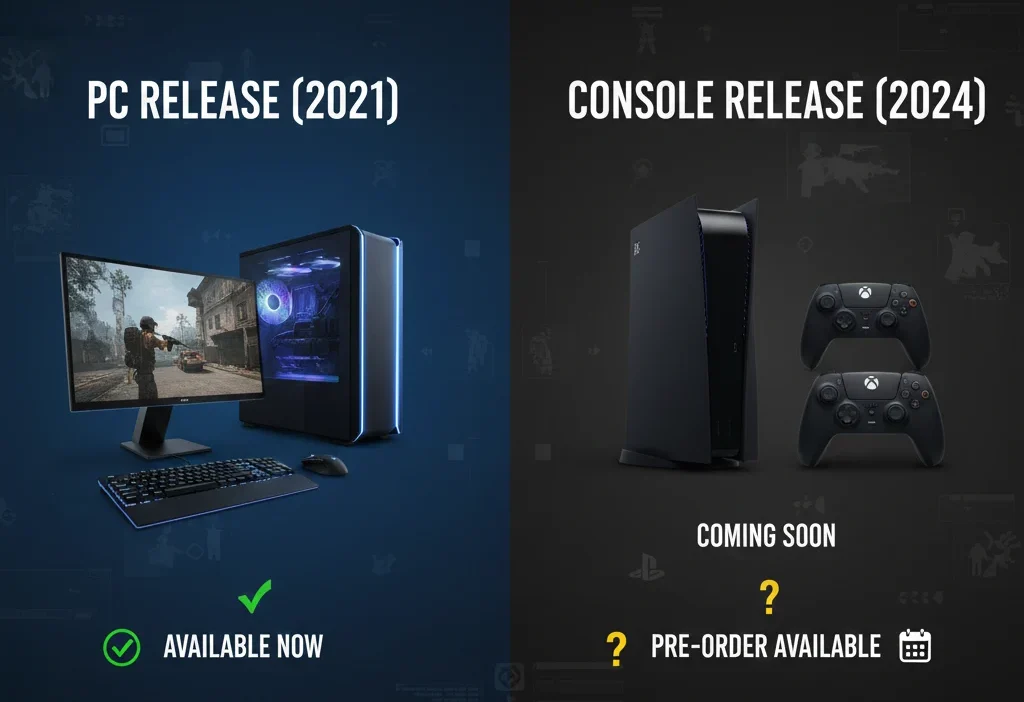
“Ready or not console release” is a phrase people search when they want to know whether the game Ready or Not is releasing on consoles or not. The words ready and not are opposite in meaning. “Ready” means prepared; “not” means the opposite. This guide explains the difference, meaning, and correct usage of both words in simple English.
The phrase ready or not console release often confuses readers because it mixes two opposite words: ready and not. People use this phrase when they want to know if something — like a game, feature, or update — is prepared or not prepared for release. These words appear simple, but many learners still struggle with their meanings and correct usage.
In this guide, you’ll learn the difference between ready and not, their meanings, how to use them correctly, and how they work in real-life English. Everything is explained in easy, child-friendly language, so even a Class 4 student can understand without difficulty.
By the end, you’ll be able to recognize when to use ready, when to use not, and how to avoid common mistakes people make in daily writing and speaking.
What Do “Ready” and “Not” Mean?
1. Meaning of “Ready”
Ready means prepared, set, or done with preparation.
It shows that a person, object, or situation is fully prepared for the next step.
Part of Speech: Adjective
Simple Examples:
- I am ready for school.
- The food is ready to eat.
- The console is ready to turn on.
2. Meaning of “Not”
Not is a word used to make something negative.
It simply means the opposite of the statement.
Part of Speech: Adverb
Simple Examples:
- I am not tired.
- The game is not working.
- She is not ready yet.
Mini Story to Remember
Imagine two friends:
- Ready is the friend who has packed his bag and tied his shoes.
- Not is the friend still brushing his teeth or finishing breakfast.
One is prepared; one is the opposite.
The Key Difference Between “Ready” and “Not”
| Feature | Ready | Not |
|---|---|---|
| Meaning | Prepared, set | Opposite/negative |
| Type | Adjective | Adverb |
| Use | Shows completion | Makes a sentence negative |
| Example | “The game is ready.” | “The game is not ready.” |
Quick Tip to Remember
- Use ready when something can start.
- Use not when something cannot start.
Carpal Tunnel Pregnancy Boy or Girl: The Hidden Truth Revealed
Common Mistakes and How to Avoid Them
Mistake 1:
❌ The update is not ready or ready?
✔️ Correct: Is the update ready or not?
Why? The order must be logical and clear.
Mistake 2:
❌ She ready for class.
✔️ Correct: She is ready for class.
Mistake 3:
❌ I am not sure is the console ready or not release.
✔️ Correct: I am not sure if the console is ready or not for release.
When to Use “Ready”
Use ready when someone or something is prepared.
Examples:
- The console is ready to turn on.
- I am ready for the test.
- The team is ready to play.
- Dinner is ready now.
- The game update is ready to download.
Real-Life Situations
- School: “My homework is ready.”
- Home: “Your clothes are ready.”
- Gaming: “The match is ready to start.”
When to Use “Not”
Use not to show the negative form.
Examples:
- The console is not working.
- I am not hungry.
- The file is not downloading.
- She is not ready yet.
- The release date is not confirmed.
Memory Hack
Think of NOT as a stop sign 🚫.
Wherever you put not, the action stops or becomes negative.
Quick Recap: Ready vs Not
- Ready = Prepared
- Not = Negative word (opposite)
- Ready is used for things that can begin.
- Not is used to show something is missing, incomplete, or the opposite of the statement.
- Use them together in questions like: “Are you ready or not?”
Advanced Tips
- Origin: “Ready” comes from Old English ræde (prepared).
- Writing Use: In essays, “ready” is formal; “not” helps make polite negatives.
- Online Use: Gamers often say “ready or not console release” to ask if the game is coming to consoles soon.
- Using them correctly improves clarity in school assignments, emails, and English exams.
Mini Quiz
Fill in the blanks:
- The update is ______ ready yet.
- I am ______ to start the match.
- The console is ______ working.
- Are you ______ or not?
- The food is ______ to eat.
5 FAQs
1. What does “ready or not console release” mean?
It means people are asking whether the game is prepared for a console release or not.
2. Is “ready” a verb or adjective?
“Ready” is an adjective—it describes something that is prepared.
3. Can “not” be used alone?
Yes, “not” can stand alone to make a sentence negative.
4. How do you use “ready or not” in a sentence?
Example: Ready or not, the update will launch today.
5. Why do people confuse ready and not?
Because one shows preparation and the other shows the opposite, especially in fast online writing.
Conclusion
Understanding the difference between ready and not is simple once you know their meanings. Ready means prepared, and not makes a sentence negative. These two words are often used together in questions, daily talk, and phrases like ready or not console release.
Practice using them in your writing and speaking. The more you use them, the easier they become.
Keep learning English every day — small steps lead to big improvement.

Francis Sufford crafts thoughtful, insightful explanations on language, meaning, and usage, blending clarity with storytelling to guide readers effectively.