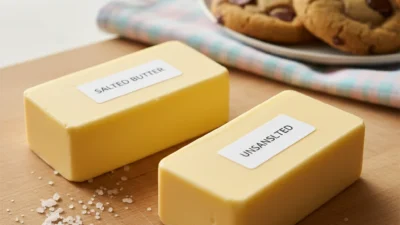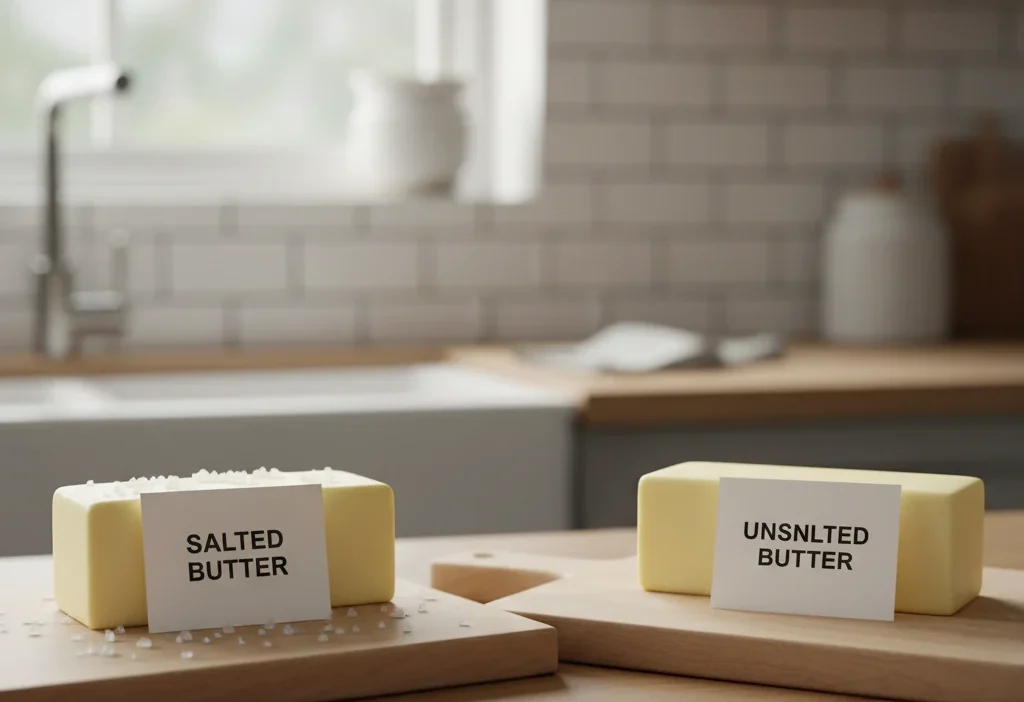
Most people grab whatever butter is in the fridge — but choosing the wrong one can completely change the taste of your dish. This simple guide will finally make “salted or unsalted butter” easy for everyone, even beginners!
Many people get confused when deciding whether to use salted or unsalted butter. Both look the same, both taste buttery, and both melt beautifully — so why does every recipe seem to care about which one you use? The truth is that the type of butter you choose can change the flavor, texture, and even the result of your dish.
In this simple and friendly guide, you’ll learn the meaning, difference, and correct usage of salted vs unsalted butter. You’ll also see real-life examples, easy explanations, and memory tricks that even a 4th-grade student can understand. By the end, you’ll know exactly when to use each type and how to avoid common mistakes in cooking and baking.
What Does Each One Mean?
What Is Salted Butter?
Salted butter is regular butter with added salt. The amount of salt varies by brand, but it’s usually just enough to give the butter a lightly salty taste.
Part of Speech: Noun
Simple Meaning: Butter + salt.
Easy Examples:
- I spread salted butter on my toast.
- We used salted butter to fry eggs.
- The popcorn tastes better with salted butter.
Salted butter works well when you want flavor quickly — like for toast, vegetables, or snacks.
What Is Unsalted Butter?
Unsalted butter is pure butter with no added salt. This means you control exactly how much salt goes into your recipe.
Part of Speech: Noun
Simple Meaning: Butter without salt.
Easy Examples:
- The cake recipe calls for unsalted butter.
- Unsalted butter lets you control the salt level.
- Chefs use unsalted butter for baking.
Unsalted butter is the top choice for baking because it keeps flavors clean and balanced.
The Key Difference Between Salted and Unsalted Butter
The biggest difference is salt.
Salted butter has salt.
Unsalted butter does not.
But that small difference changes flavor, freshness, and how recipes turn out.
Comparison Table: Salted vs Unsalted Butter
| Feature | Salted Butter | Unsalted Butter |
|---|---|---|
| Salt Content | Yes, added salt | No added salt |
| Taste | Slightly salty | Pure, creamy |
| Best For | Spreading, cooking | Baking, exact recipes |
| Shelf Life | Longer (salt preserves) | Shorter |
| Control Over Salt | Low | High |
| Common Use | Toast, snacks | Cakes, cookies, pastries |
⭐ Quick Tip to Remember
If you want flavor fast → Use salted butter.
If you want control → Use unsalted butter.
Common Mistakes and How to Avoid Them
❌ Mistake 1: Using Salted Butter in Baking
Wrong: I made cookies with salted butter, but they tasted too salty.
Right: Use unsalted butter so you can add the exact amount of salt yourself.
Why: Salted butter changes the flavor of baked goods and can make them too salty.
❌ Mistake 2: Using Unsalted Butter When You Want Flavor
Wrong: My garlic bread tasted bland with unsalted butter.
Right: Use salted butter or add extra salt.
Why: Salted butter boosts flavor instantly.
❌ Mistake 3: Mixing the Two Without Adjustments
Wrong: I swapped salted and unsalted butter without changing the recipe.
Right: Reduce added salt by ¼ teaspoon per stick when using salted butter.
Why: Recipes get unbalanced if you don’t adjust salt.
When to Use Salted Butter
Use salted butter when you want quick flavor or when salt level doesn’t need to be exact.
⭐ Best Situations:
- Toast and bread
- Vegetables (like corn or potatoes)
- Frying eggs or pancakes
- Popcorn
- Simple everyday cooking
Example Sentences:
- I spread salted butter on my warm toast.
- She melted salted butter on baked potatoes.
- Salted butter made the popcorn tastier.
- We used salted butter to fry the eggs.
- The vegetables tasted better with salted butter.
Memory Trick:
Salted butter = “ready-to-eat flavor.”
When to Use Unsalted Butter
Use unsalted butter when a recipe needs precision, especially in baking.
⭐ Best Situations:
- Cakes
- Cookies
- Muffins
- Pastries
- Brownies
- Frosting
Example Sentences:
- The cake needs unsalted butter for the perfect taste.
- Unsalted butter keeps cookies from being too salty.
- Chefs prefer unsalted butter for pastries.
- I used unsalted butter to make frosting.
- The recipe works best with unsalted butter.
Memory Trick:
Unsalted butter = “control the flavor.”
Quick Recap: Salted vs Unsalted Butter
- Salted Butter: Has salt, tastes stronger, great for cooking and spreading.
- Unsalted Butter: No salt, perfect for baking and precise recipes.
- Use salted for quick flavor.
- Use unsalted when you want control.
- If you substitute, always adjust salt.
Advanced Tips (Optional but Helpful)
1. A Bit of History
Butter has been used for thousands of years. Salt was added long ago to preserve it longer before refrigerators existed.
2. In Formal Cooking
Professional chefs almost always choose unsalted butter because it gives consistent results.
3. In Essays or Exams
If writing about cooking, always mention why unsalted butter is preferred for accuracy.
4. In Online or Casual Writing
People often use the words interchangeably, but knowing the difference makes your recipes more reliable.
Mini Quiz: Test Your Understanding
Fill in the blanks:
- Use ______ butter when baking cookies.
- Salted butter has ______ added.
- Unsalted butter gives you more ______ over flavor.
- For toast, most people prefer ______ butter.
- If you use salted butter instead of unsalted, reduce the added ______.
5 FAQs
1. Which is better: salted or unsalted butter?
Use salted butter for cooking and unsalted butter for baking.
2. Can I bake with salted butter?
Yes, but reduce the added salt by ¼ teaspoon per stick.
3. Does unsalted butter taste different?
Yes, it tastes pure, creamy, and not salty at all.
4. Why do chefs prefer unsalted butter?
Because it gives full control over the flavor.
5. Is salted butter healthier than unsalted butter?
Both are the same, except salted butter has added salt.
Conclusion
Choosing between salted and unsalted butter is easier than it seems. Salted butter gives quick flavor, while unsalted butter gives you complete control. Now that you know the meanings, differences, and correct usage, you can follow recipes confidently and get better results every time. Keep practicing, keep tasting, and enjoy learning something new in the kitchen every day

Gwendoline Riley delivers clear, compelling insights into language and usage, helping readers understand meanings, nuances, and differences with confidence.