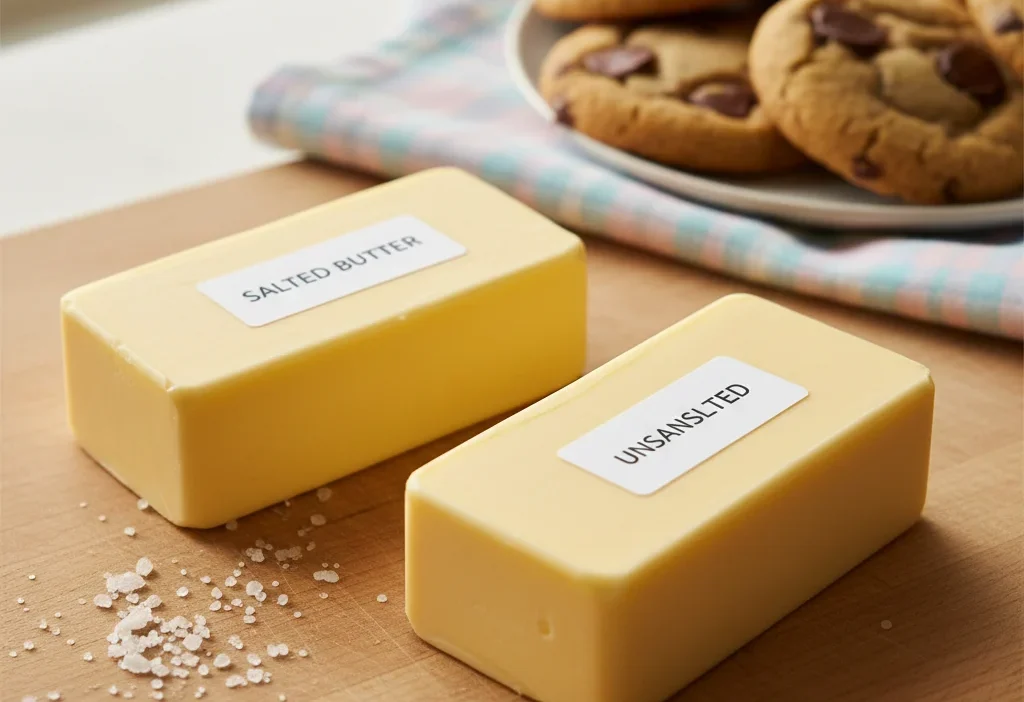
Most home bakers never realize how choosing one simple ingredient—salted or unsalted butter—can completely change the taste, texture, and even color of their cookies. Today, you’ll finally understand which butter to use, when, and why
When people start baking cookies, one of the biggest questions they ask is: Should I use salted or unsalted butter for cookies? These two types of butter look almost the same, but they behave very differently in baking. Because of this, many beginners get confused and end up using the wrong one — which leads to cookies that are too salty, too flat, too soft, or not sweet enough.
In this simple step-by-step guide, you will learn the exact difference between salted and unsalted butter, how each one tastes, how they change your cookie texture, and when you should use each type. You will also see examples, mistakes to avoid, handy memory tricks, and a clear comparison chart.
This guide is written in very easy English so even a 4th-grade student can understand it. Let’s make cookie baking simple, fun, and mistake-free!
What Does Each Type of Butter Mean?
1. What Is Salted Butter?
Salted butter is regular butter with salt already mixed in. The amount of salt is not always the same — different brands add different levels of salt.
Simple Meaning:
Butter + salt already inside.
Easy Examples:
- “This butter tastes a little salty even before cooking.”
- “I spread salted butter on warm toast.”
- “My cookies turned out salty because I used salted butter.”
Part of Speech:
Noun (a type of ingredient)
2. What Is Unsalted Butter?
Unsalted butter is pure butter without any added salt. This gives bakers full control over the flavor of the recipe.
Simple Meaning:
Plain butter with no salt.
Easy Examples:
- “Unsalted butter tastes plain but rich.”
- “Most baking recipes use unsalted butter.”
- “The flavor of cookies is cleaner with unsalted butter.”
Part of Speech:
Noun (a type of ingredient)
The Key Difference Between Salted and Unsalted Butter for Cookies
Salted vs unsalted butter may seem like a small difference, but in baking, it makes a big impact.
Comparison Table
| Feature | Salted Butter | Unsalted Butter |
|---|---|---|
| Salt Content | Contains added salt (amount varies) | No added salt |
| Taste | Slightly salty | Pure, clean, creamy |
| Cookie Flavor | More salty, sometimes uneven | Perfectly controlled sweetness |
| Best For | Simple snacks, toast, savory baking | Cookies, cakes, desserts |
| Texture Effect | Can make cookies spread more | More consistent results |
| Control | Low control over final taste | High control (best for baking) |
Quick Tip to Remember:
When baking cookies, use unsalted butter 90% of the time.
Use salted butter only if the recipe specifically asks for it.
Common Mistakes and How to Avoid Them
❌ Mistake 1: Using Salted Butter Without Reducing Salt
Incorrect:
“I used salted butter AND added a full teaspoon of salt.”
Correct:
Reduce salt by ¼–½ teaspoon if you use salted butter.
❌ Mistake 2: Thinking Both Butters Are the Same
Salted butter varies from brand to brand. Some are lightly salted; others are very salty. This changes your cookie flavor.
❌ Mistake 3: Using Salted Butter in Delicate Cookies
Cookies like sugar cookies, shortbread, and butter cookies need a clean taste. Salted butter can overpower them.
When to Use Salted Butter (With Examples)
You should use salted butter in cookies only when:
✔️ You enjoy a slightly salty-sweet taste
Example:
- “I love salty caramel cookies, so I used salted butter.”
✔️ You don’t mind uneven salt level
- “The cookies were tasty but a bit saltier in some bites.”
✔️ The recipe clearly says “salted butter”
- “Grandma’s recipe specifically uses salted butter.”
✔️ You are making brown butter cookies
Salted brown butter adds a richer caramel flavor.
✔️ You want a stronger flavor
Salt boosts certain chocolate flavors.
When to Use Unsalted Butter (With Examples)
Most of the time, unsalted butter is the correct choice for cookies. Use it when:
✔️ You want full control over flavor
- “The cookies tasted perfect because I adjusted the salt myself.”
✔️ You are following a standard baking recipe
- “The recipe said ‘butter,’ so I used unsalted butter.”
✔️ You want sweeter, softer cookies
- “Everyone loved my soft chocolate chip cookies.”
✔️ Texture matters
- “Unsalted butter helped my cookies bake evenly.”
✔️ You want the safest option
- “I wasn’t sure which butter to use, so I chose unsalted.”
Memory Hack (Super Simple!)
👉 If you’re baking desserts, think “U” for “Unsalted.”
U = Unsalted = Universal baking butter.
Quick Recap: Salted vs Unsalted Butter for Cookies
- Salted butter = Butter with salt, tastes stronger, less control
- Unsalted butter = Pure butter, best for baking
- Most cookie recipes prefer unsalted butter
- Salted butter can make cookies unpredictable
- Unsalted butter gives better sweetness, texture, and color
- If using salted butter, reduce the added salt
Advanced Tips for Better Baking
🔹 1. Why Bakers Prefer Unsalted Butter
Professional bakers want exact control. Even a tiny change in salt can affect flavor.
🔹 2. Texture and Spread
Salted butter sometimes has more moisture. This can make cookies spread too much.
🔹 3. The Science Behind the Taste
Salt affects caramelization, sweetness, and richness. Too much salt can hide other flavors.
🔹 4. In Online Recipes
Most recipes from the US and other countries use unsalted butter unless stated otherwise.
🔹 5. Cultural Differences
European salted butter is saltier than American salted butter. Always taste first!
Mini Quiz (Test Yourself!)
Fill in the blanks:
- Unsalted butter has ______ added salt.
- Salted butter can make cookies taste more ______.
- Most baking recipes prefer ______ butter.
- Reduce added salt if you use ______ butter.
- “U” stands for ______ butter in baking.
(Answers: no, salty, unsalted, salted, unsalted)
5 FAQs
1. Is salted or unsalted butter better for cookies?
Unsalted butter is usually better because it gives you full control over sweetness and flavor.
2. Can I replace unsalted butter with salted butter in cookies?
Yes, but reduce added salt by ¼–½ teaspoon.
3. Why do my cookies taste too salty?
You likely used salted butter without adjusting the recipe.
4. Does salted butter change cookie texture?
Yes. It can make cookies spread more and taste uneven.
5. What butter do professional bakers use?
Almost all professionals use unsalted butter for cookies and desserts.
Conclusion
Choosing between salted or unsalted butter for cookies may seem small, but it greatly affects flavor, sweetness, and texture. Now you know exactly how each type of butter behaves and when to use it. For most recipes, unsalted butter is the safest and best option. But salted butter can work too — as long as you adjust the salt properly.
Practice with both and see which taste you prefer. With this simple guide, you can bake cookies that are delicious, balanced, and perfect every time. Keep learning, keep experimenting, and enjoy baking with confidence!

Francis Sufford crafts thoughtful, insightful explanations on language, meaning, and usage, blending clarity with storytelling to guide readers effectively.