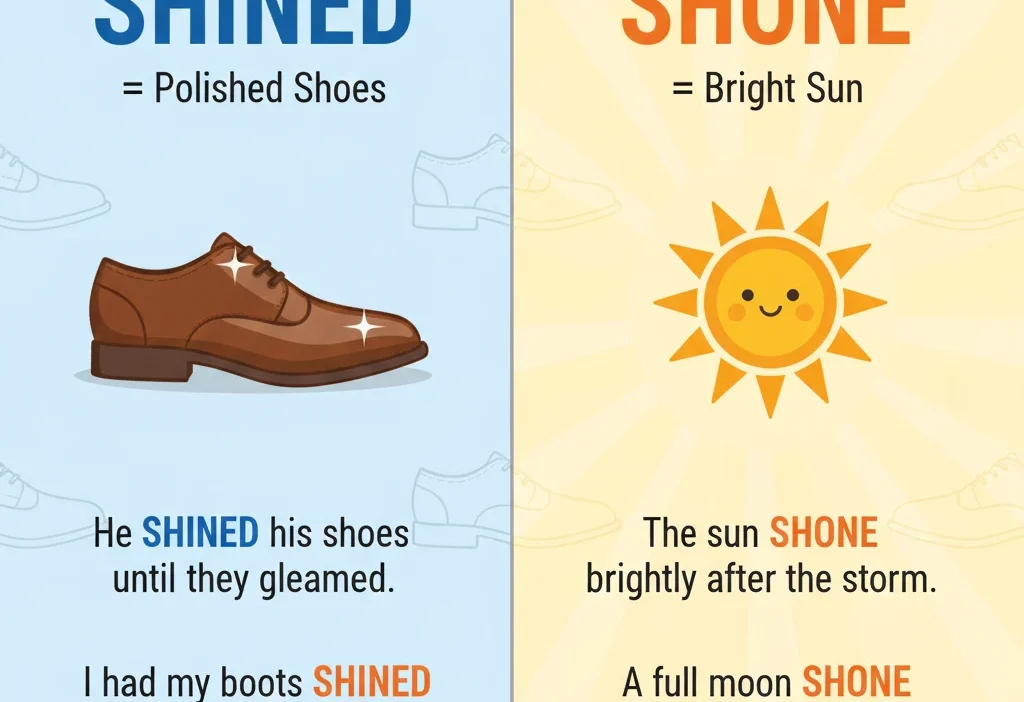
👉 Both shined and shone are correct.
Use shined when talking about polishing or cleaning something.
Use shone when talking about giving light or glowing.
Once you learn this simple rule, you’ll never confuse shined or shone again.
English can be tricky, especially when two words look almost the same and come from the same verb. Shined or shone is one of the most common grammar confusions for learners and even native speakers. Many people ask: What is the difference between shined and shone? Or Which one is correct?
The good news is that both words are correct, but they are used in different situations. In this easy guide, you will learn the meaning, difference, and correct usage of shined vs shone with very simple explanations. We will use short sentences, real-life examples, and clear rules that even a 4th-grade student can understand.
By the end of this article, you will know exactly how to use shined or shone in speaking, writing, exams, and daily conversation—with confidence.
What Does Each Word Mean?
Let’s start with the simple meanings.
What Does Shined Mean?
Shined is the past tense of shine when it means to polish or make something clean and bright.
- Part of speech: Verb
- Used for: Objects that someone actively cleans or polishes
Easy Examples of “Shined”:
- I shined my shoes before school.
- She shined the glass window with a cloth.
- He shined the car to make it look new.
👉 Think of hands + effort. If someone did the action, use shined.
What Does Shone Mean?
Shone is also the past tense of shine, but it is used when something gives off light naturally.
- Part of speech: Verb
- Used for: Light, brightness, or glowing
Easy Examples of “Shone”:
- The sun shone brightly all day.
- The stars shone in the night sky.
- Her smile shone with happiness.
👉 Think of light, glow, or brightness. No cleaning involved.
The Key Difference Between Shined and Shone
The difference between shined and shone is based on meaning, not tense.
Comparison Table: Shined vs Shone
| Feature | Shined | Shone |
|---|---|---|
| Main Meaning | Polished or cleaned | Gave light or glowed |
| Action by Person? | Yes | No |
| Used for | Shoes, glass, metal | Sun, moon, stars, eyes |
| Example | She shined her shoes | The moon shone |
Quick Tip to Remember
🧠 If you can use “polished,” choose SHINED.
🧠 If you can use “glowed,” choose SHONE.
Common Mistakes and How to Avoid Them
Many learners make mistakes with shined or shone because both are past forms of shine.
❌ Common Mistake 1:
- The sun shined brightly.
✅ Correct:
- The sun shone brightly.
👉 Why? The sun gives light. It is not cleaned or polished.
❌ Common Mistake 2:
- She shone her shoes before school.
✅ Correct:
- She shined her shoes before school.
👉 Why? Shoes are polished by a person.
❌ Common Mistake 3:
- The flashlight shined in the dark.
✅ Better:
- The flashlight shone in the dark.
👉 Light source = shone
When to Use Shined
Use shined when someone actively makes something clean or bright.
Situations to Use “Shined”:
- Cleaning shoes
- Polishing metal
- Making glass or mirrors clean
- Any action done by hand
Easy Sentences with “Shined”:
- I shined my bicycle before the race.
- Mom shined the dining table.
- He shined his boots for the wedding.
- She shined the trophy proudly.
- The worker shined the marble floor.
When to Use Shone
Use shone when something naturally gives light or brightness.
Situations to Use “Shone”:
- Sun, moon, stars
- Lamps, bulbs, candles
- Eyes, smiles, faces (emotional glow)
Easy Sentences with “Shone”:
- The moon shone all night.
- Her eyes shone with joy.
- The lamp shone in the dark room.
- The stars shone like diamonds.
- His future shone with hope.
Memory Hack ✨
🌞 If it shines by itself → SHONE
🧽 If you shine it → SHINED
Quick Recap: Shined vs Shone
- Shined = polished or cleaned
- Shone = gave off light
- People shined objects
- Sun, moon, and lights shone
- Both are correct — just used differently
Advanced Tips (Optional)
Word Origin (Simple History)
- Shone comes from older British English and is often preferred in formal writing.
- Shined is more common when talking about objects and actions.
In Exams & Formal Writing
- Teachers prefer correct meaning over style.
- Use shone for light sources in essays.
- Use shined for actions in stories.
In Texting & Online Writing
- Many people incorrectly use shined for everything.
- Correct usage makes your English look polished and confident.
Winter Spring Summer or Fall Trailer Hidden Meaning Revealed
Mini Quiz: Test Yourself 📝
Fill in the blanks with shined or shone.
- The sun _____ all morning.
- She _____ her black shoes.
- His eyes _____ with excitement.
- He _____ the silver plate.
- The lantern _____ in the darkness.
- Mom _____ the windows.
Answers:
- shone
- shined
- shone
- shined
- shone
- shined
(FAQs)
1. Is “shined or shone” both correct?
Yes. Both are correct, but their usage depends on meaning.
2. What is the difference between shined and shone?
Shined means polished. Shone means gave light.
3. Can I use shined for the sun?
No. The sun shone, not shined.
4. Which is more common in British English?
Shone is more commonly used for light.
5. Is “shined” wrong in grammar?
No. Shined is correct when used properly.
Conclusion
Now you know the clear difference between shined or shone. Both words are correct, but they are not used in the same way. Shined is for cleaning or polishing something by hand. Shone is for light, glow, or brightness that comes naturally.
This simple rule can instantly improve your writing, speaking, and exam performance. Practice using both words in daily sentences, and soon it will feel natural. Remember, improving English is not about memorizing hard rules—it’s about understanding small, clear ideas step by step.

Gwendoline Riley delivers clear, compelling insights into language and usage, helping readers understand meanings, nuances, and differences with confidence.