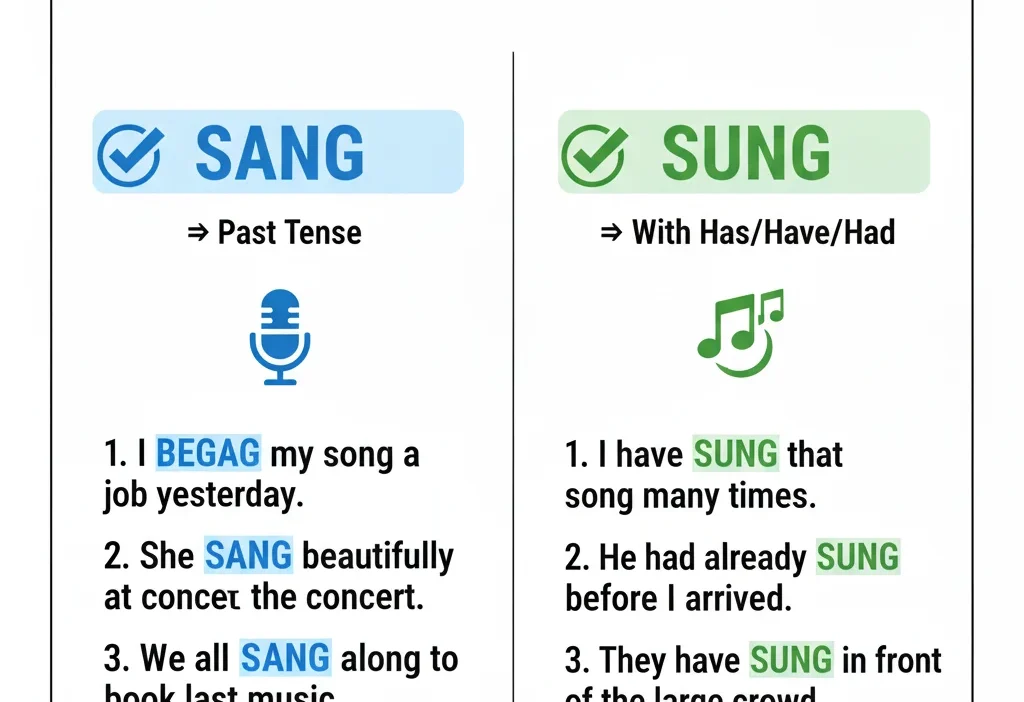
“‘Sang’ is the simple past of ‘sing,’ while ‘sung’ is the past participle used with ‘have,’ ‘has,’ or ‘had’.”
Confused about when to use “sang” or “sung”? You’re not alone. These two forms of the verb sing are often mixed up, but they have distinct grammatical roles:
- “Sang” is the simple past tense, used for actions that happened and finished in the past:
“She sang her favorite song yesterday.” - “Sung” is the past participle, used with helping verbs like have, has, or had:
“She has sung that song many times before.”
Using the wrong form can confuse readers and make sentences grammatically incorrect. Whether you’re writing essays, lyrics, stories, or social media posts, understanding the difference ensures your writing is accurate, professional, and clear.
In this article, you’ll also learn:
- Common mistakes with “sang” and “sung”
- Tips to remember which form to use
- Practical examples in different contexts
By the end, you’ll be able to use sang and sung confidently in any sentence, making your writing polished and mistake-free.
What Does Each Word Mean?
Let’s start with the basics: both sang and sung come from the same base verb — sing.
1. Sang – The Simple Past Tense
“Sang” is the past tense of “sing.”
You use it when you’re talking about something that already happened in the past.
✅ Examples:
- I sang at the school concert yesterday.
- She sang her favorite song in the shower.
- They sang beautifully at the party last night.
🧠 Quick tip: If you’re talking about yesterday or a past event, use sang.
2. Sung – The Past Participle
“Sung” is the past participle of “sing.”
You use it with helping verbs like has, have, or had.
✅ Examples:
- I have sung that song many times.
- She has sung in many competitions.
- We had sung before the show started.
🧠 Quick tip: If there’s a helper verb (has/have/had), use sung, not sang.
The Key Difference Between Sung and Sang
Here’s a simple table to make things crystal clear:
| Feature | Sang | Sung |
|---|---|---|
| Part of Speech | Simple past tense | Past participle |
| Used With | No helping verb | Helping verbs (has, have, had) |
| Example | She sang loudly at the concert. | She has sung many songs in her life. |
| Time Reference | Past (finished action) | Past connected to the present |
| Quick Tip | Use “sang” alone | Use “sung” with has/have/had |
🪄 Memory Hack:
Think of “sang” as a solo (it stands alone) and “sung” as a duet (it needs a helper verb!).
Common Mistakes and How to Avoid Them
Even fluent speakers sometimes mix these up. Let’s look at some common errors.
❌ Wrong: I have sang that song before.
✅ Right: I have sung that song before.
Why? “Have” is a helping verb → use “sung.”
❌ Wrong: She sung beautifully yesterday.
✅ Right: She sang beautifully yesterday.
Why? There’s no helping verb → use “sang.”
❌ Wrong: They had sang together in the choir.
✅ Right: They had sung together in the choir.
Why? “Had” is a helping verb → use “sung.”
💡 Pro Tip:
Always check for helper verbs.
If you see has, have, or had, use sung.
If not, use sang.
When to Use “Sang”
Use sang when you’re describing something that already happened — no helping verb needed.
It’s like saying: “I did it in the past, and it’s done now.”
✅ Examples:
- The kids sang a song for their teacher.
- I sang in the music competition last week.
- She sang all night at the karaoke bar.
- We sang the national anthem together.
- He sang so loudly that everyone laughed.
🎯 Easy Trick to Remember:
If you can replace “sang” with another simple past verb like walked, played, or jumped, you’re using it correctly.
Example:
- I walked to school yesterday → I sang a song yesterday.
✅ Perfect!
When to Use “Sung”
Use sung only with helping verbs — has, have, or had.
It shows that the action is connected to the present or completed with a helper.
✅ Examples:
- I have sung this tune many times.
- She has sung in front of thousands of people.
- They had sung before the guests arrived.
- We have sung together since childhood.
- He had sung for years before he retired.
🎵 Memory Trick:
Think of “sung” as the finished melody — it’s part of a bigger song (sentence) that needs support from has, have, or had.
Quick Recap: Sang vs Sung
Here’s a quick and easy summary you can screenshot or save:
✅ Sang
- Simple past tense
- No helping verb
- Example: “I sang yesterday.”
✅ Sung
- Past participle
- Needs helping verb (has, have, had)
- Example: “I have sung many songs.”
🧩 Remember:
If there’s no helper, say sang.
If there is a helper, say sung.
Advanced Tips: The Grammar Behind It
If you love knowing why, here’s a fun fact.
“Sang” and “sung” come from the Old English word singan, which meant “to sing.”
Over time, English changed how verbs work. Some verbs became irregular, meaning they don’t follow the normal -ed rule.
So instead of saying “singed,” English uses:
- Sing → Present
- Sang → Past
- Sung → Past participle
🧠 In formal writing or exams:
Use sang for past actions and sung for perfect tenses.
For example:
- “The choir sang beautifully.”
- “The choir has sung beautifully all week.”
🚫 In texting or casual speech, people sometimes mix them up (“I have sang”), but in formal English, that’s incorrect.
Mini Quiz: Test Your Knowledge!
Fill in the blanks with sang or sung.
- She ______ in the concert yesterday.
- I have ______ that song before.
- They ______ the national anthem this morning.
- We had ______ before the ceremony began.
- He ______ a lullaby to his baby last night.
- The group has ______ together for years.
- I ______ my favorite tune while cleaning.
✅ Answers:
- sang
- sung
- sang
- sung
- sang
- sung
- sang
5(FAQs)
1. What’s the difference between “sang” and “sung”?
“Sang” is the simple past tense; “sung” is the past participle used with helping verbs like has, have, had.
2. Is it correct to say “I have sang”?
No. The correct form is “I have sung.”
3. Can I use “sung” without a helper verb?
No. “Sung” always needs has, have, or had.
4. Why do people confuse “sang” and “sung”?
Because both sound similar and refer to the past, but their grammar roles are different.
5. How can I easily remember the rule?
If there’s a helper verb, use sung. If there isn’t, use sang.
Conclusion
Now you know the difference between “sung” and “sang” — and how to use each one confidently!
- Use sang when talking about something that happened in the past.
- Use sung with has, have, or had.
The more you practice, the easier it gets. Try making your own sentences today!
Remember: every song has rhythm, and so does English grammar.

Polly Clark creates clear, insightful guides on language and usage, helping readers understand meanings, differences, and nuances with clarity and confidence.