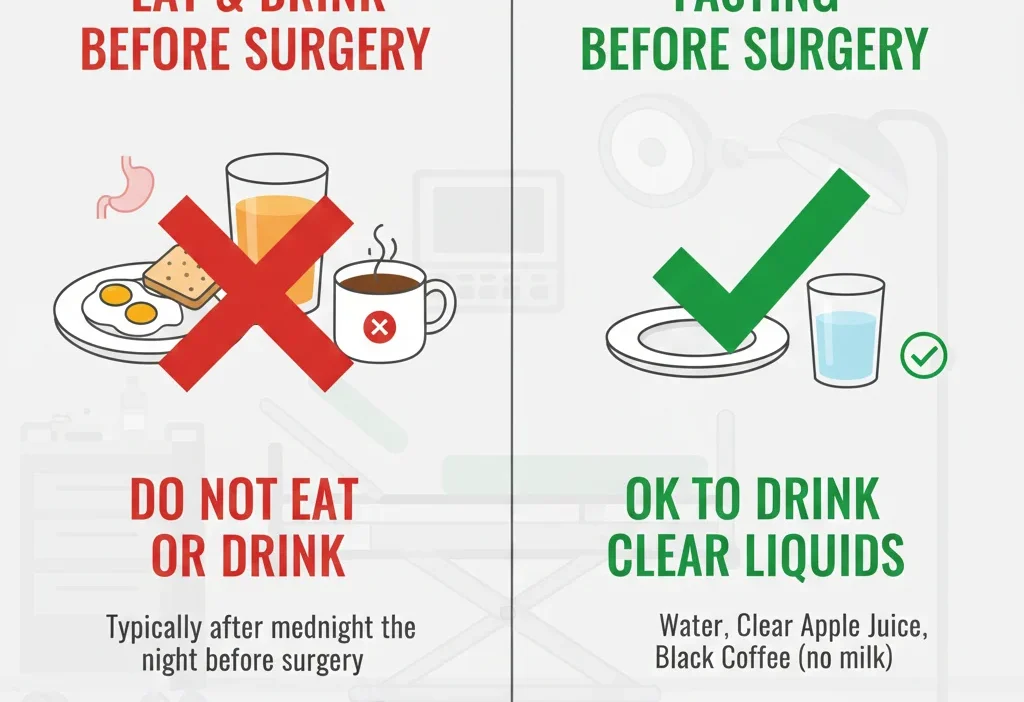
Before surgery, patients are usually advised not to eat or drink for a certain period—often 6–8 hours—depending on the type of procedure and anesthesia. This is to prevent complications like nausea, vomiting, or aspiration during surgery. Always follow your doctor’s instructions carefully to stay safe.
Many people get confused about surgery eat or drink before instructions. Some think it’s okay to have a small snack, while others avoid even water. Understanding these guidelines is crucial because eating or drinking at the wrong time can affect your surgery, anesthesia, and recovery.
In this guide, you’ll learn exactly what it means to avoid food and drinks before surgery, why it matters, and practical tips to remember. By the end, even beginners will feel confident about following these instructions without stress.
What Does Each Phrase Mean?
“Surgery Eat Before”
This phrase refers to eating before a surgical procedure. In most cases, doctors actually advise not to eat anything for several hours.
Part of Speech: Verb + Adverb (action + time)
Examples:
- You cannot eat before surgery without risking complications.
- I was told not to eat anything this morning before my operation.
- Patients sometimes forget to eat before surgery, which can be dangerous if allowed.
“Surgery Drink Before”
This phrase refers to drinking before surgery. Similarly, most surgeries require avoiding liquids for a few hours.
Part of Speech: Verb + Adverb
Examples:
- Do not drink water before surgery unless instructed otherwise.
- She asked if she could drink tea before surgery, but the doctor said no.
- Some medications need to be taken with a sip of water before surgery, so always clarify what to drink before surgery.
The Key Difference Between “Eat” and “Drink” Before Surgery
| Aspect | Eat Before Surgery | Drink Before Surgery |
|---|---|---|
| Meaning | Refers to solid food intake | Refers to liquids like water, juice, tea |
| Typical Restriction Time | 6–8 hours before surgery | 2–4 hours before surgery (varies by doctor) |
| Example Sentence | “Do not eat before surgery.” | “Do not drink before surgery.” |
| Quick Tip | Think “food stops early” | Think “liquid stops closer to surgery” |
Memory Tip: Remember solids stop longer before surgery, liquids are usually allowed slightly closer to the operation.
Common Mistakes and How to Avoid Them
Incorrect Example 1: “I drank coffee an hour before surgery.”
Correction: “I avoided drinking anything at least 2–4 hours before surgery.”
Why it happens: People forget that caffeine and milk are liquids that can affect anesthesia.
Incorrect Example 2: “I had a sandwich just before surgery.”
Correction: “I did not eat any solid food 6–8 hours before surgery.”
Why it happens: Misunderstanding fasting rules; always check your doctor’s instructions.
Incorrect Example 3: “I only sipped water right before surgery.”
Correction: “I stopped all drinks 2 hours before surgery unless the doctor advised otherwise.”
Why it happens: Even small sips can matter depending on your anesthesia type.
When to Eat Before Surgery
In general, eating before surgery is not allowed for safety reasons. But in rare cases, clear instructions might allow light meals 8–12 hours prior.
Example Sentences:
- I had my last solid meal 8 hours before surgery.
- My doctor allowed a light breakfast the night before surgery.
- Avoid high-fat or heavy meals before surgery.
- Stick to doctor-approved foods if allowed.
When to Drink Before Surgery
Liquids are sometimes allowed 2–4 hours before surgery depending on your procedure. Clear liquids like water are preferred.
Example Sentences:
- I drank a small amount of water 3 hours before surgery.
- Avoid milk, juice with pulp, or caffeinated drinks before surgery.
- Ask your doctor what to drink before surgery if unsure.
- Remember: clear liquids are safest and easiest to digest.
Memory Hack: Think “solids stop early, liquids closer to surgery.”
Quick Recap: Eat vs Drink Before Surgery
- Eat before surgery: Avoid solid food 6–8 hours prior.
- Drink before surgery: Limit liquids 2–4 hours prior, mostly water.
- Main reason: Prevent nausea, vomiting, or aspiration during anesthesia.
- Tip: Always follow your doctor’s personalized instructions.
Advanced Tips
- Historically, fasting before surgery started to reduce anesthesia risks.
- In formal medical instructions, clarity is key: “No solids 8 hours prior, no liquids 2 hours prior.”
- Misuse of instructions online or via messages can confuse patients and increase risks.
Mini Quiz
Fill in the blanks with “eat” or “drink”:
- You should not ________ anything 6 hours before surgery.
- Clear water may be allowed to ________ 2 hours before surgery.
- Avoid milk or juice before surgery; do not ________.
- My doctor said I can ________ tea the night before surgery.
- Always ask before you ________ anything before surgery.
FAQs
- Can I drink water before surgery?
Usually yes, 2–4 hours before, unless your doctor says otherwise. - Why can’t I eat before surgery?
Eating increases the risk of vomiting and complications under anesthesia. - Is coffee allowed before surgery?
No, caffeinated drinks are considered liquids that can interfere with anesthesia. - What if I accidentally eat before surgery?
Inform your doctor immediately; surgery may be delayed for safety. - How long should fasting last?
Typically 6–8 hours for solids and 2–4 hours for liquids, but always follow your doctor’s advice.
Conclusion
Understanding surgery eat or drink before rules is crucial for a safe operation. Avoiding solids and liquids at the right times reduces risks and ensures a smooth procedure. By following these simple tips and remembering “solids stop early, liquids stop closer,” you can confidently prepare for surgery.
Practice these habits, ask questions when unsure, and you’ll improve both your safety and your understanding of medical instructions every day.

Gwendoline Riley delivers clear, compelling insights into language and usage, helping readers understand meanings, nuances, and differences with confidence.