Many people search for swath / swathe because they see both spellings used and are unsure which one is correct. Is it wide swath or wide swathe? What does swathe mean, and why do dictionaries show two versions of the same word? This confusion often appears in news articles, emails, academic writing, and even social media captions.
At first glance, swath and swathe look like completely different words. In reality, they are closely connected. The confusion exists mainly because of British English vs American English spelling rules, and because the word has both noun and verb meanings. Some writers worry that using the “wrong” version may look unprofessional or hurt clarity.
This article clears up that confusion once and for all. You will get a quick answer, learn the origin and history of the word, see how usage differs in the UK and the US, and discover which spelling you should use based on your audience. By the end, you will understand the concept of swath, know what swathe means, and use both forms with confidence.
Swath / Swathe
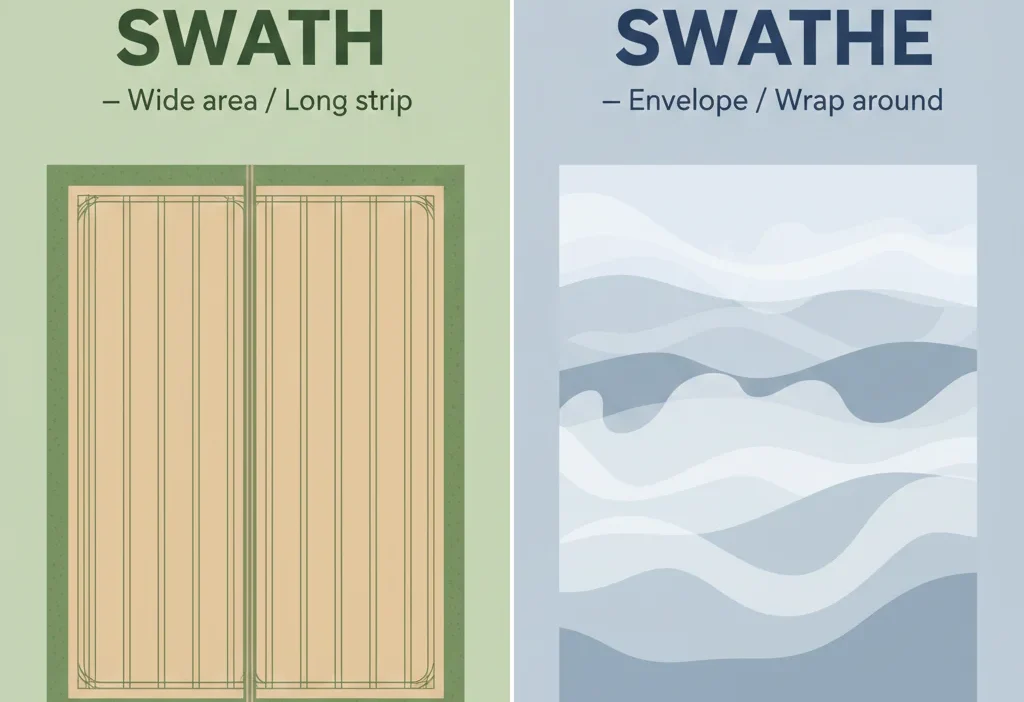
Swath and swathe are two forms of the same word, with different spellings and related meanings.
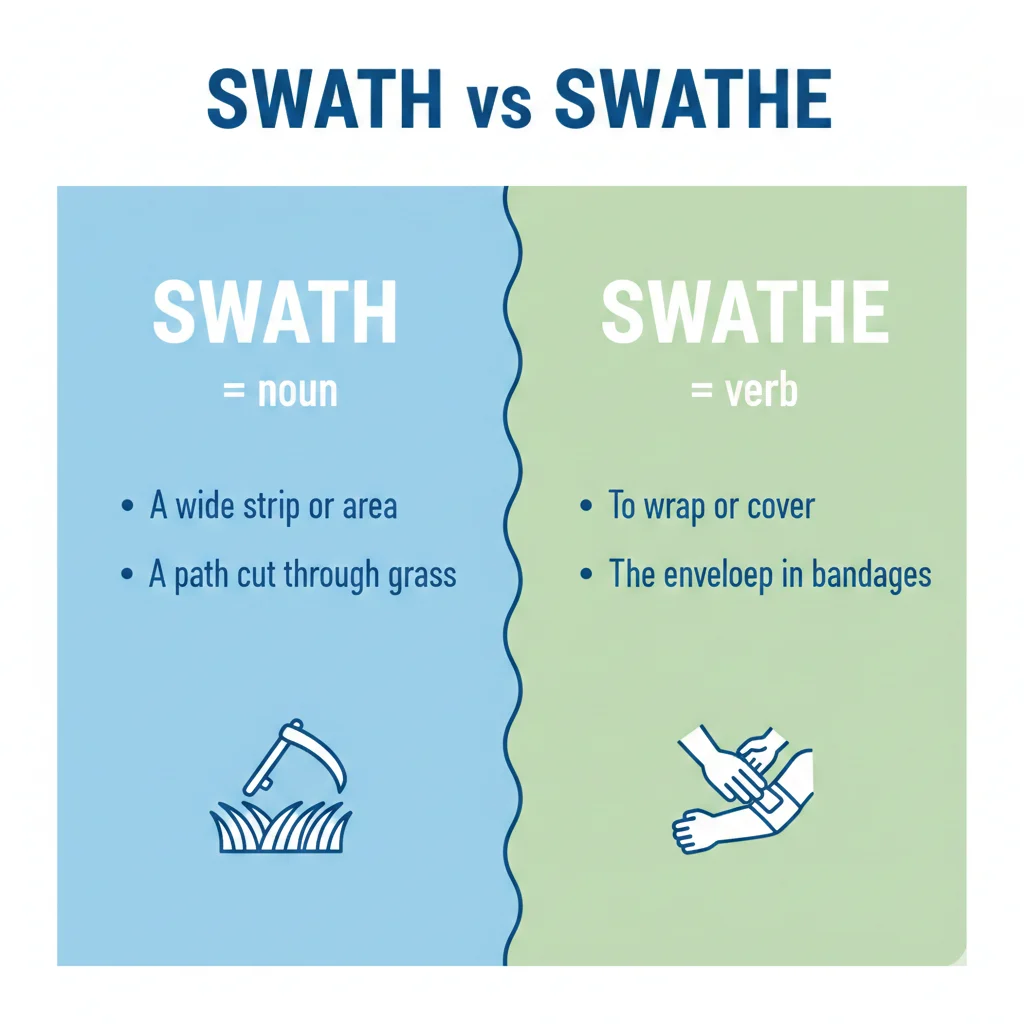
- Swath (noun): A long strip or wide area.
- Example: A wide swath of land was damaged by the storm.
- Swathe (verb): To wrap, cover, or envelop.
- Example: The valley was swathed in fog.
So, is it wide swath or swathe?
The correct phrase is wide swath, not wide swathe, because this use is a noun.
The Origin of Swath / Swathe
The word comes from Old English “swæð,” meaning a track, path, or strip left by a scythe when cutting grass. Early farming societies used the term to describe the line of cut crops, which explains the idea of length and width.
Over time:
- Swath became the noun form, meaning a broad strip or area.
- Swathe developed as the verb, meaning to bind or wrap.
The spelling difference exists because English evolved differently in British and American usage, with British English often keeping the -e ending.
British English vs American English Spelling
In modern English, spelling depends largely on region.
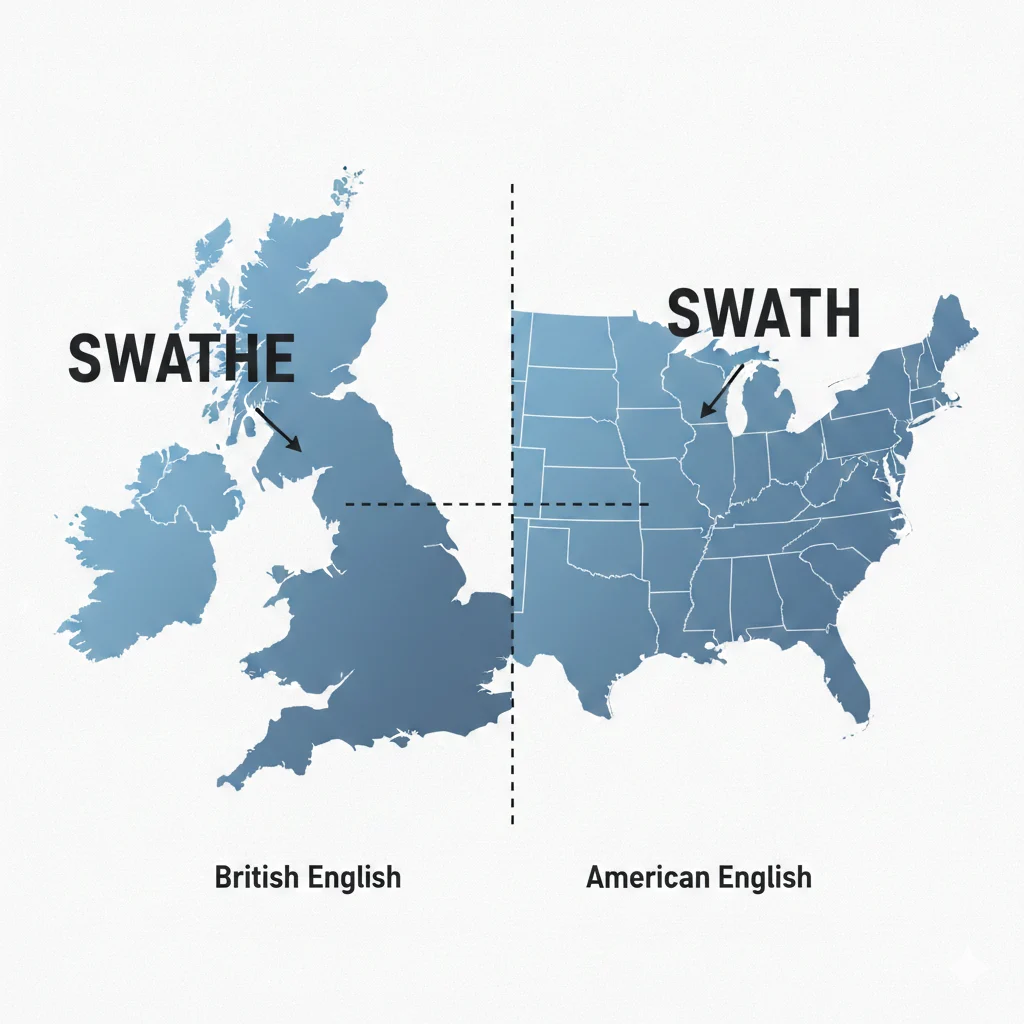
- British English commonly uses swathe as a verb and recognizes swath as a noun.
- American English strongly favors swath for the noun and often avoids swathe.
Comparison Table
| Aspect | British English | American English |
|---|---|---|
| Noun form | Swath | Swath |
| Verb form | Swathe | Swathe (less common) |
| Common phrase | Wide swath | Wide swath |
How do you spell swathe in the UK?
In the UK, swathe is the standard verb spelling.
Which Spelling Should You Use?
Your audience decides the best choice.
- US audience: Use swath for clarity and familiarity.
- UK or Commonwealth audience: Use swathe for the verb, swath for the noun.
- Global audience: Use swath for general writing. It is widely understood and safe.
If your goal is simple, clear communication, swath is usually the best option.
Common Mistakes with Swath / Swathe
Here are frequent errors writers make:
- ❌ A wide swathe of land was destroyed.
✅ A wide swath of land was destroyed. - ❌ The news swath the city in fear.
✅ The news swathed the city in fear. - ❌ Mixing spellings randomly in one article
✅ Stay consistent with one style
Understanding the concept of swath as a noun helps avoid these mistakes.
Swath / Swathe in Everyday Examples
Emails
- This policy affects a wide swath of employees.
News
- Floods covered a wide swath of farmland.
Social Media
- The mountains were swathed in morning mist.
Formal Writing
- The reform impacted a broad swath of the population.
These examples show how swath and swathe naturally fit different contexts.
Swath / Swathe – Google Trends & Usage Data
Search trends show that:
- Swath is more popular in the United States.
- Swathe is searched more often in the UK.
- The phrase wide swath appears frequently in news and reports.
- What does swathe mean? is a common question among learners.
This data confirms that regional spelling drives most confusion.

Swath / Swathe Comparison Table
| Feature | Swath | Swathe |
| Part of speech | Noun | Verb |
| Main meaning | Broad strip or area | To cover or wrap |
| Common regions | US, global | UK |
| Example | Wide swath of land | Swathed in fog |
FAQs About Swath / Swathe
1. Is it wide swath or swathe?
It is wide swath. This use is a noun.
2. What does swathe mean?
Swathe means to wrap, cover, or envelop something.
3. How do you spell swathe in the UK?
In the UK, swathe is the standard verb spelling.
4. What is the concept of swath?
A swath is a long, wide strip or area, often used figuratively.
5. Can swath and swathe be interchangeable?
No. Swath is mainly a noun, while swathe is a verb.
6. Is swathe used in American English?
Yes, but less often than swath.
7. Which spelling is better for SEO writing?
Swath is safer for global and US-based audiences.
Conclusion
The confusion between swath / swathe comes from spelling variation, grammar roles, and regional English differences. Once you understand that swath is a noun and swathe is a verb, the choice becomes simple. If you are describing a wide area, such as land, people, or impact, swath is correct. If you are talking about covering or wrapping, swathe is the right word.
Audience matters. American readers expect swath, while British readers accept swathe as a verb. For global or professional writing, consistency and clarity matter most. Choose one style, apply it correctly, and your writing will look confident and polished.
By learning the origin, usage rules, and real-world examples, you now have a complete understanding of the word. Whether you are writing emails, articles, or formal documents, you can now use swath / swathe accurately and without hesitation.

Jenn Ashworth offers clear, engaging explanations of language and usage, helping readers grasp meanings, nuances, and differences with accuracy and ease.