Both Tylenol (acetaminophen) and ibuprofen can help relieve hangover symptoms like headache and body pain, but ibuprofen is usually safer for most people because it reduces inflammation. Tylenol can harm your liver if taken after drinking alcohol. Always use the right dose and check with a doctor if unsure.
Waking up with a pounding headache after a night of drinking is never fun. Many people ask: “Should I take Tylenol or ibuprofen for a hangover?” The confusion is understandable. Both medications relieve pain, but they work differently and have different risks. Choosing the wrong one can make symptoms worse—or even harm your liver or stomach.
In this guide, you’ll learn the meaning, differences, and correct usage of Tylenol and ibuprofen, along with practical examples, safety tips, and memory tricks. By the end, you’ll know exactly which medicine to pick for your next rough morning. Even if you’re a beginner, this guide makes it simple and safe to understand—no medical degree needed.
What Does Each Medicine Mean?
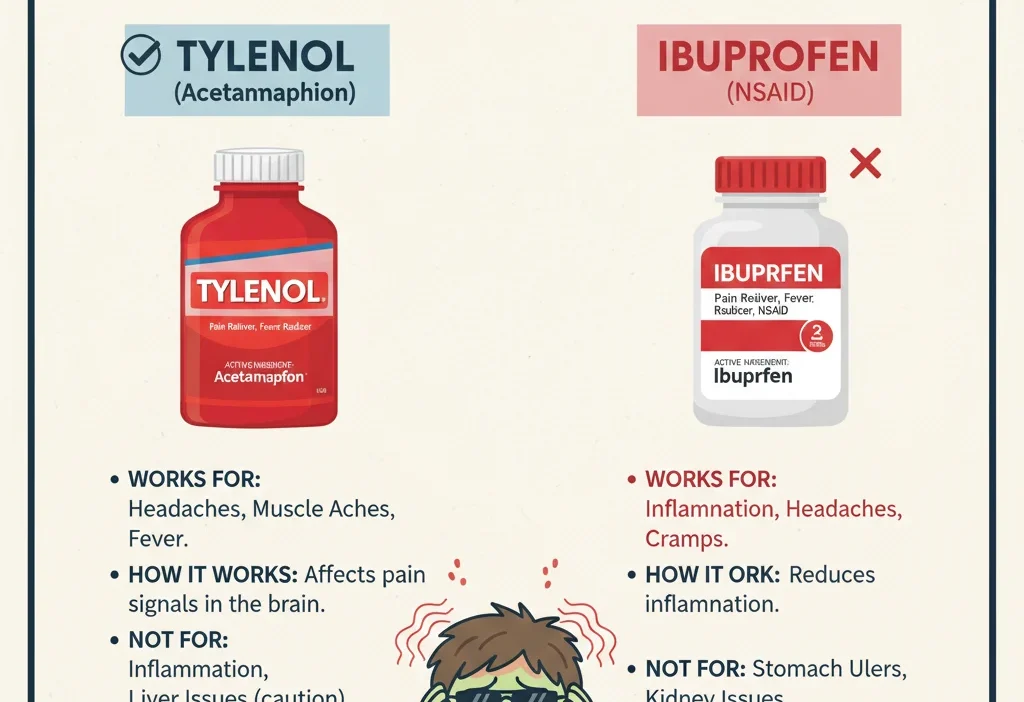
Tylenol (Acetaminophen)
Definition: Tylenol is a pain reliever and fever reducer. It works mainly on the brain to block pain signals.
Part of Speech: Noun (brand name for acetaminophen, a drug)
Examples:
- I took Tylenol for my headache after the party.
- Tylenol can help reduce fever and mild pain.
- Always read the Tylenol label before taking it.
Tip: Tylenol is gentle on the stomach but hard on the liver if combined with alcohol.
Ibuprofen
Definition: Ibuprofen is a non-steroidal anti-inflammatory drug (NSAID) that reduces pain, inflammation, and fever.
Part of Speech: Noun (brand name for ibuprofen, a drug)
Examples:
- I used ibuprofen for my hangover headache.
- Ibuprofen helps reduce swelling and muscle pain.
- Take ibuprofen with food to protect your stomach.
Tip: Ibuprofen is better for inflammation and hangover headaches but can irritate the stomach lining.
The Key Difference Between Tylenol and Ibuprofen
| Feature | Tylenol (Acetaminophen) | Ibuprofen (NSAID) |
|---|---|---|
| Pain Relief | Mild to moderate | Mild to strong |
| Fever Reduction | Yes | Yes |
| Inflammation Relief | No | Yes |
| Alcohol Interaction | High risk (liver) | Lower risk |
| Stomach Irritation | Low | Moderate |
| Example Use | Headache, fever | Headache, body aches, swelling |
Quick Tip: If your hangover includes inflammation (like a sore neck or body pain), ibuprofen is usually the better choice. If your stomach is sensitive and you didn’t drink much, Tylenol might work—but avoid alcohol.
Heat or Ice for Sciatica: The Tiny Detail You’re Doing Wrong
Common Mistakes and How to Avoid Them
Mistake 1: Taking Tylenol right after drinking.
- ❌ Incorrect: I’ll take Tylenol to cure my hangover.
- ✅ Correct: I’ll wait a few hours before taking Tylenol, or choose ibuprofen.
Why: Alcohol plus Tylenol can damage your liver.
Mistake 2: Taking ibuprofen on an empty stomach.
- ❌ Incorrect: I’ll take ibuprofen first thing in the morning.
- ✅ Correct: Take ibuprofen with breakfast or a snack.
Why: It can irritate your stomach lining.
Mistake 3: Exceeding the recommended dose.
- ❌ Incorrect: Two times the dose will work faster.
- ✅ Correct: Always follow label instructions.
Why: Overdose risks liver or kidney damage.
When to Use Tylenol
Use Tylenol when:
- You have a mild headache or fever.
- Your stomach is sensitive to other drugs.
- You have no alcohol in your system.
Examples:
- My head hurts, but I haven’t drunk alcohol—Tylenol works.
- Tylenol helped me sleep when I had a mild fever.
- I use Tylenol for toothaches or minor pain.
- For a light hangover without alcohol consumption recently.
Memory Hack: Think “Tylenol = Take it if your stomach is tender.”
When to Use Ibuprofen
Use ibuprofen when:
- Your hangover includes headaches, muscle aches, or inflammation.
- You have eaten something before taking it.
- You don’t have stomach ulcers or kidney issues.
Examples:
- I took ibuprofen for a hangover headache after a late dinner.
- Muscle aches from yesterday’s workout? Ibuprofen helps.
- Ibuprofen reduces swelling from minor injuries.
- For intense hangover headaches or sinus pressure.
Memory Hack: Think “Ibu = Inflammation buster.”
Quick Recap: Tylenol vs Ibuprofen
- Tylenol: Gentle on stomach, risky with alcohol, mild pain relief.
- Ibuprofen: Reduces pain and inflammation, okay with food, safer than Tylenol after drinking.
- Hangover tip: Usually prefer ibuprofen, avoid Tylenol right after drinking.
- Always: Follow recommended doses, check labels, and eat before NSAIDs.
Advanced Tips
- Tylenol was first discovered in the late 1800s; ibuprofen in the 1960s.
- Both appear in medical writing, essays, and prescriptions; misuse online can cause confusion.
- Doctors often recommend ibuprofen for post-drinking headaches, unless you have liver issues.
Mini Quiz
Fill in the blanks:
- _______ is safer for hangovers because it reduces inflammation.
- Avoid _______ right after drinking alcohol.
- Take ibuprofen with _______ to protect your stomach.
- Tylenol works mainly on the _______ to block pain.
- For sore muscles, _______ is usually the better choice.
Answers: 1. Ibuprofen 2. Tylenol 3. Food 4. Brain 5. Ibuprofen
Conclusion
Now you know the key differences between Tylenol and ibuprofen for hangovers. Tylenol works on pain and fever but can harm your liver if alcohol is involved. Ibuprofen handles inflammation and headaches, making it generally safer after a night of drinking. Always take the right dose, eat before medication, and check your health conditions. By following these tips, you’ll make better choices and relieve hangovers more safely. Understanding the difference between these common medicines is simple once you know their effects. Keep practicing these tips, and you’ll feel confident choosing the right pain reliever every time. Remember: small steps in learning lead to big improvements in health and knowledge.
FAQs
1. Can I take Tylenol and ibuprofen together for a hangover?
Yes, but only in recommended doses and separated by a few hours. This can maximize pain relief safely.
2. How long does it take for ibuprofen to work on hangover headaches?
Usually 20–30 minutes after taking it with food.
3. Can Tylenol damage my liver if I’m hungover?
Yes, especially if alcohol is still in your system. Avoid Tylenol immediately after drinking.
4. Which is better for nausea with a hangover?
Neither Tylenol nor ibuprofen treats nausea. Ginger, hydration, or anti-nausea medicine is better.
5. Can I drink alcohol after taking ibuprofen?
It’s safer than Tylenol but still not recommended, as it can irritate your stomach.

Francis Sufford crafts thoughtful, insightful explanations on language, meaning, and usage, blending clarity with storytelling to guide readers effectively.