All hornets are wasps, but not all wasps are hornets.
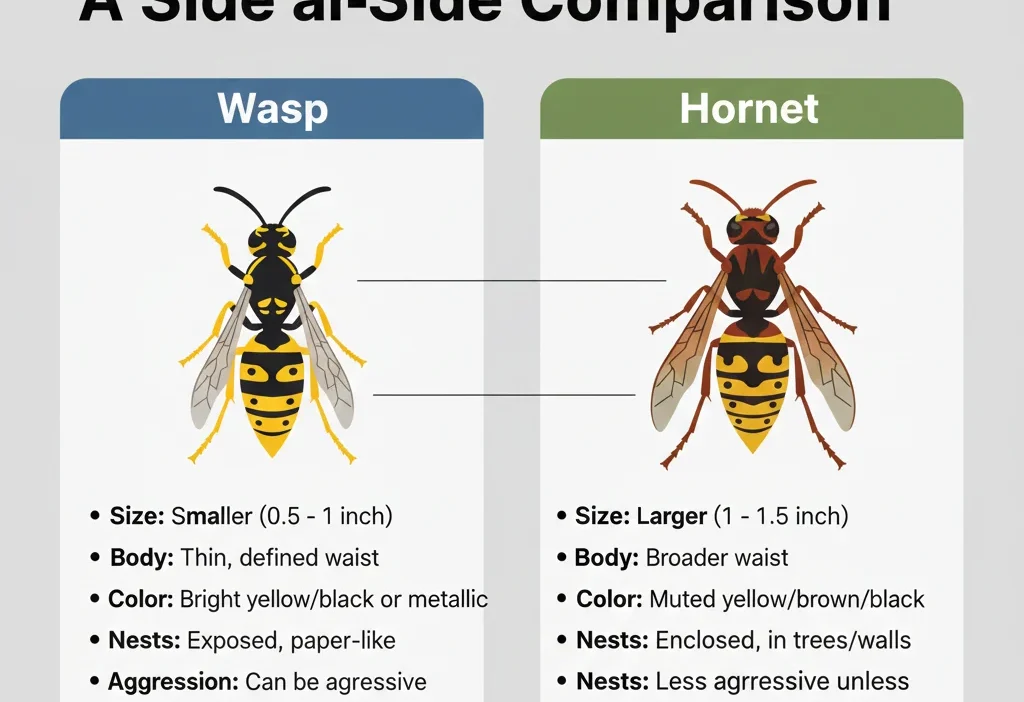
Hornets are a specific type of wasp that are usually bigger, louder, and more aggressive, while “wasp” is a general word for many similar stinging insects.
Many people use the words wasp and hornet as if they mean the same thing. You might hear someone say, “A hornet stung me!” when it was actually a wasp. This confusion is very common because both insects look similar, fly in the same way, and can sting painfully.
The truth is simple but important: wasp or hornet is not an equal choice. One word is broad, and the other is specific. Knowing the difference between wasp and hornet helps you speak more clearly, write correctly, and even understand nature better.
In this easy guide, you will learn the meaning of wasp and hornet, how they are different, when to use each word, and how to avoid common mistakes. Everything is explained in plain English, with simple examples that even a 4th-grade student can understand.
What Does Each Word Mean? 🧐
What Is a Wasp?
A wasp is a type of flying insect that can sting. Wasps have slim bodies, narrow waists, and smooth skin. There are thousands of wasp species in the world.
Part of speech: Noun
Simple meaning:
A wasp is a general name for many stinging insects.
Easy Examples:
- A wasp flew near my lunch at the park.
- The wasp built a nest under the roof.
- I stayed still so the wasp would not sting me.
👉 Memory tip:
Think of wasp as a big family name.
What Is a Hornet?
A hornet is a special type of wasp. Hornets are usually larger, make louder buzzing sounds, and can be more aggressive if their nest is disturbed.
Part of speech: Noun
Simple meaning:
A hornet is a large wasp.
Easy Examples:
- A hornet nest was hanging from the tree.
- The hornet looked bigger than a normal wasp.
- We moved away quickly when we saw a hornet.
👉 Memory tip:
Hornet = big wasp.
The Key Difference Between Wasp or Hornet
Here is a clear comparison to understand the difference between wasp and hornet:
| Feature | Wasp | Hornet |
|---|---|---|
| Meaning | General insect group | Specific type of wasp |
| Size | Small to medium | Larger and heavier |
| Aggression | Can sting | Often more aggressive |
| Usage | Everyday general use | Use when sure it’s a hornet |
| Example | “A wasp is flying.” | “A hornet guards its nest.” |
✅ Quick Tip
If you are not sure, say wasp.
Only say hornet when you are sure it is one.
Common Mistakes and How to Avoid Them ❌➡️✅
Mistake 1: Using “hornet” for every stinging insect
❌ A hornet was on my soda can.
✅ A wasp was on my soda can.
Why it happens:
People think “hornet” sounds stronger or scarier.
Fix:
Use wasp unless you clearly see a hornet.
Mistake 2: Thinking wasp and hornet mean the same
❌ Wasps and hornets are exactly the same.
✅ Hornets are a type of wasp.
Fix:
Remember: All hornets are wasps, but not all wasps are hornets.
Mistake 3: Using hornet in school writing without proof
❌ The hornet attacked people in the park.
✅ The wasp attacked people in the park.
Fix:
In exams or essays, use wasp unless specified.
When to Use Wasp 🐝
Use wasp when:
- You are speaking generally
- You are unsure of the insect type
- You are writing for school or kids
Real-Life Examples
- A wasp entered the classroom.
- The wasp nest is near our window.
- I ran away from the wasp.
- Wasps like sweet food.
- A wasp can sting more than once.
👉 Best choice for daily talk: Wasp
When to Use Hornet 🐝
Use hornet when:
- The insect is large
- You are sure it is a hornet
- You are explaining wildlife or nature
Real-Life Examples
- The hornet nest was very big.
- A hornet guarded its home.
- Hornets can be dangerous near nests.
- The hornet looked larger than other wasps.
🧠 Memory Hack
Picture a big, angry wasp → that’s a hornet.
Quick Recap: Wasp vs Hornet ✅
- Wasp = general word
- Hornet = special kind of wasp
- Not all wasps are hornets
- Hornets are usually bigger
- When unsure, use wasp
Advanced Tips (Optional) 📘
Word History
- Wasp comes from old English words meaning “stinging insect.”
- Hornet comes from words meaning “horn-shaped insect.”
In Exams & Writing
Teachers prefer correct and safe terms. Using wasp is usually better unless the question mentions hornets.
Online & Texting
Calling every insect a hornet can confuse readers. Accuracy matters.
Mini Quiz: Test Yourself ✏️
Fill in the blanks:
- A hornet is a type of ______.
- If you are unsure, say ______.
- Hornets are usually ______ than wasps.
- A wasp is a ______ term.
- Not all wasps are ______.
Answers:
- wasp
- wasp
- bigger
- general
- hornets
FAQs: Wasp or Hornet ❓
1. Is a hornet more dangerous than a wasp?
Yes, hornets can be more aggressive, especially near nests.
2. Are hornets and wasps the same thing?
No. Hornets are a type of wasp.
3. Which word should I use in school writing?
Use wasp unless you are sure it’s a hornet.
4. Can both wasps and hornets sting?
Yes, both can sting more than once.
5. Why do people fear hornets more?
Because hornets are larger and louder.
Conclusion
Now you clearly understand the difference between wasp and hornet. A wasp is the general word for many stinging insects, while a hornet is just one special type of wasp. This simple rule can help you speak, write, and learn with confidence.
Remember: if you are ever unsure, wasp is always the safer choice. With practice, these small word differences become easy and natural. Keep learning, keep asking questions, and improve your English one word at a time.

Eley Williams writes clear, engaging guides on confusing words and phrases, helping readers understand meanings, differences, and correct usage with ease.